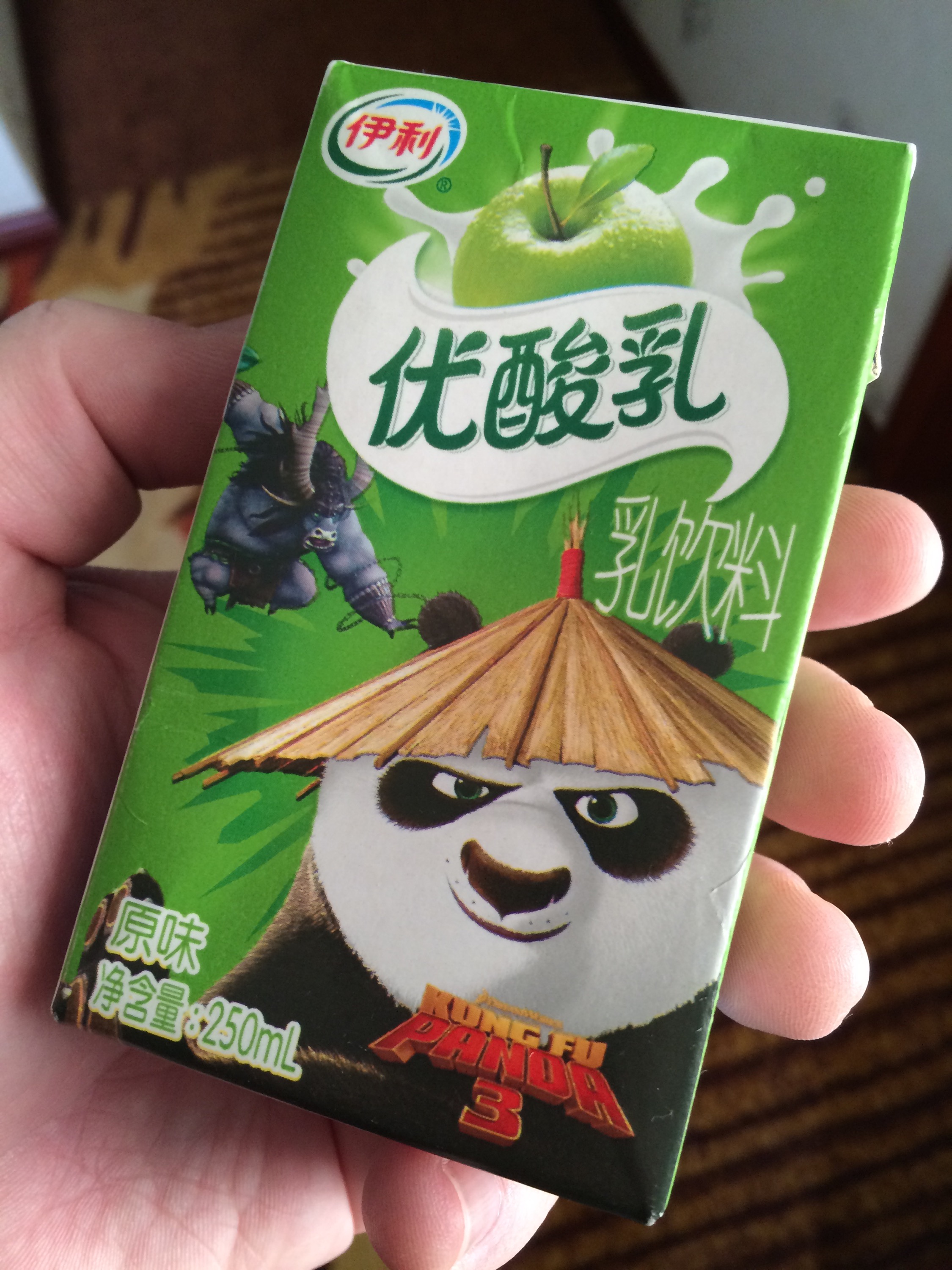
 Inexplicably, the hotel provided me with a plate of cherry tomatoes & fruit and a juice box.
I cannot escape DreamWorks. There is no escape.
Inexplicably, the hotel provided me with a plate of cherry tomatoes & fruit and a juice box.
I cannot escape DreamWorks. There is no escape.
In the spirit of the Datong dinner menu, I present to you the English translations of the cable channels available in my hotel here in Jiayuguan. I present them unedited, including capitlization and punctuation.
“Optimal optimal baby” was all reruns, so I read a book.
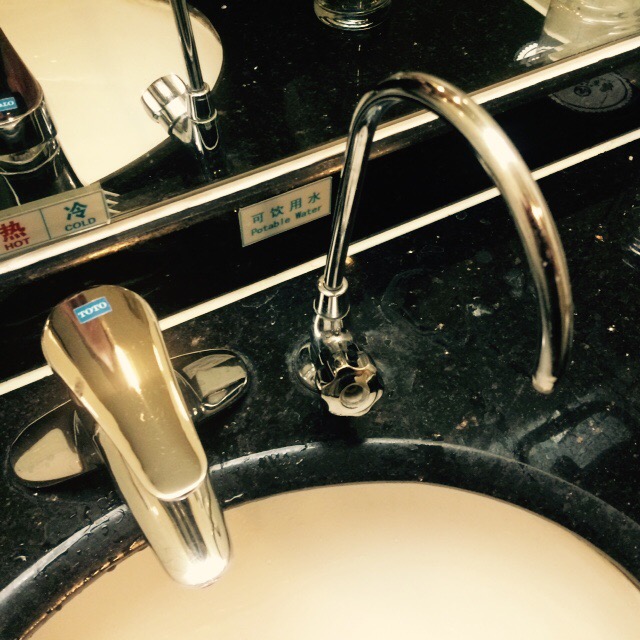 Why doesn’t every hotel in China have these?
(Also, I don’t trust it and will be sticking with the provided bottled water.)
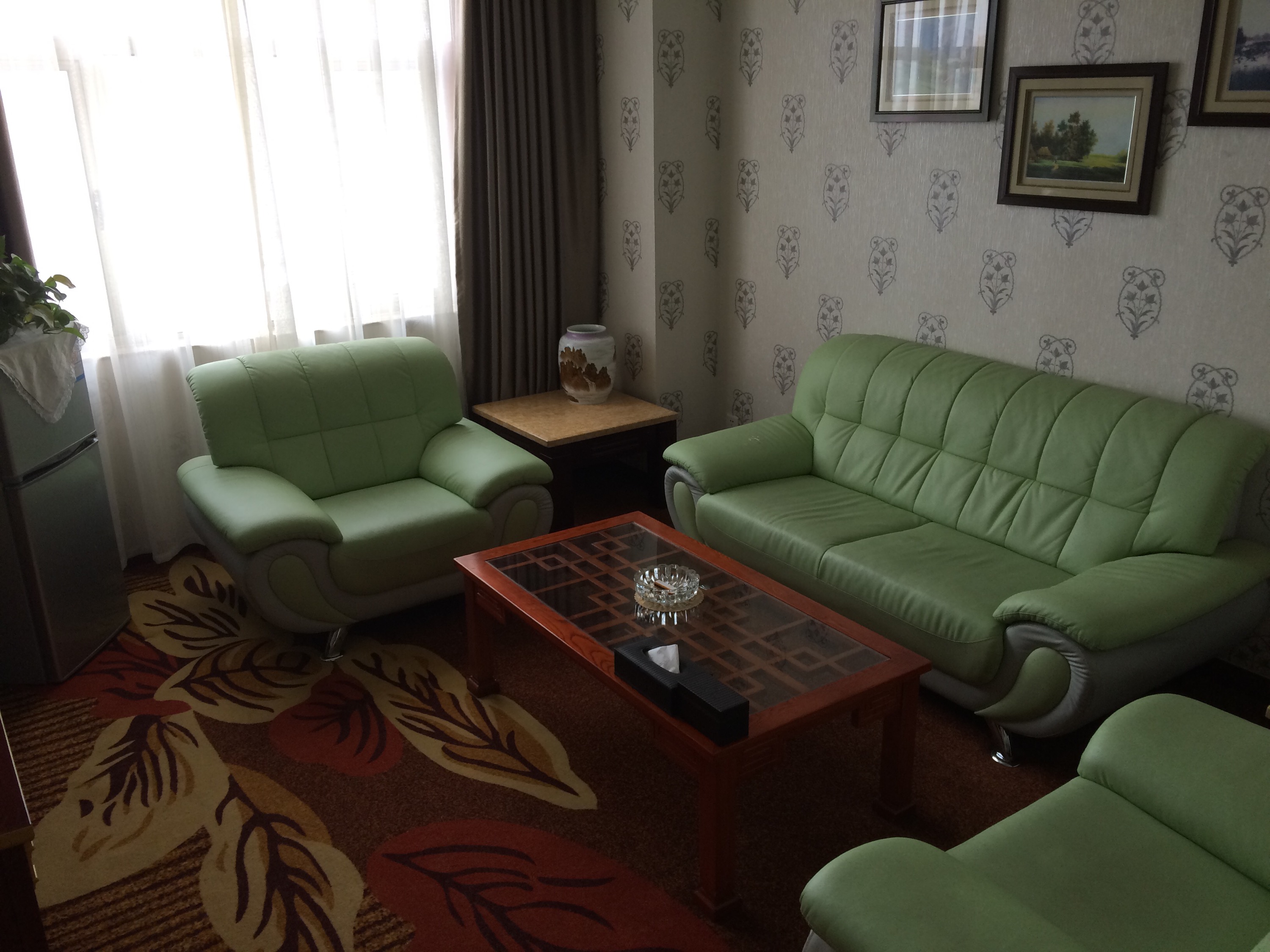 I was upgraded to an executive suite at the Jiayuguan Hotel, replete with green leather chairs in the sitting room and a teddy bear on the bed, of course.
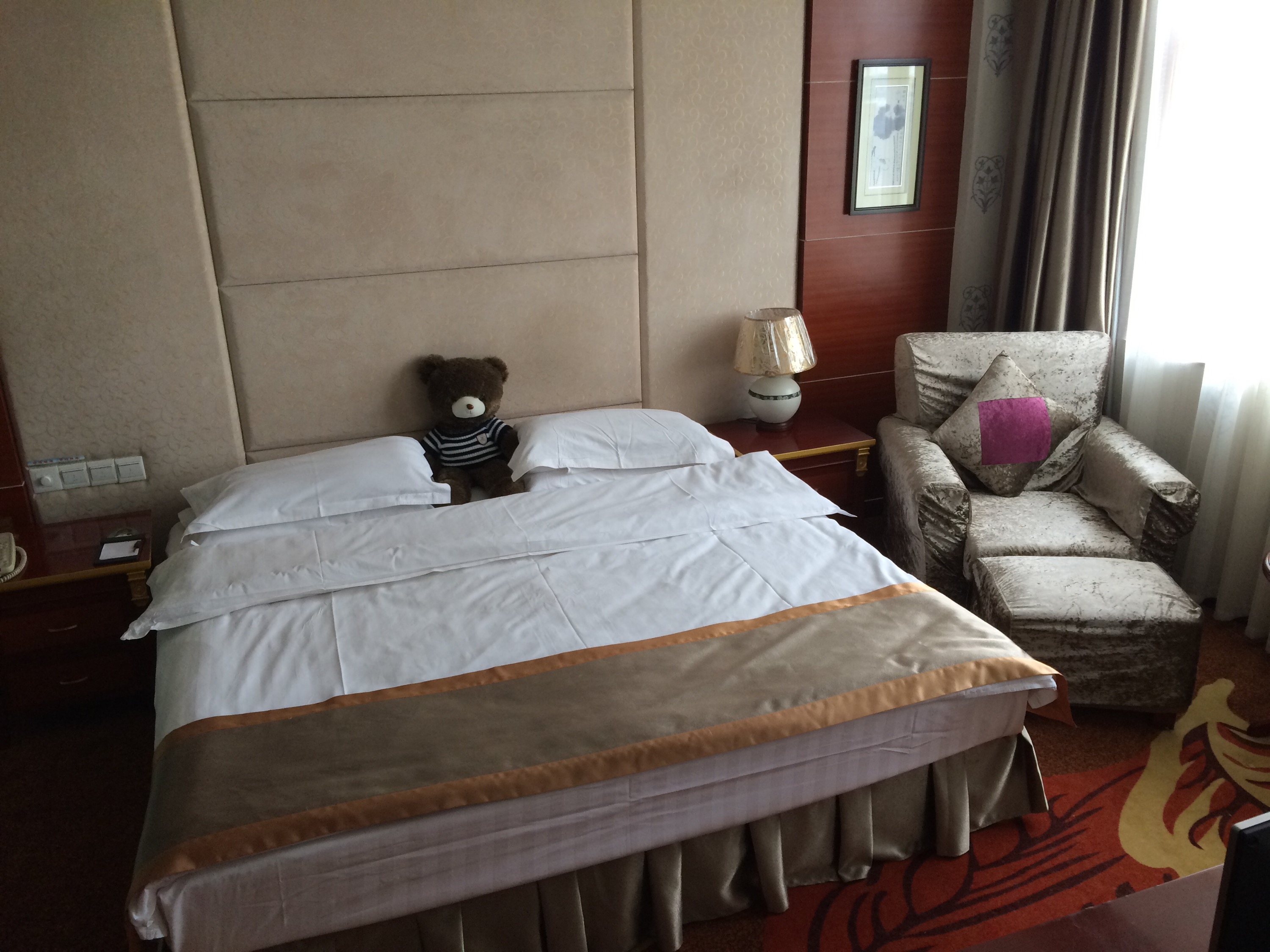 The bathroom was functional and clean.
 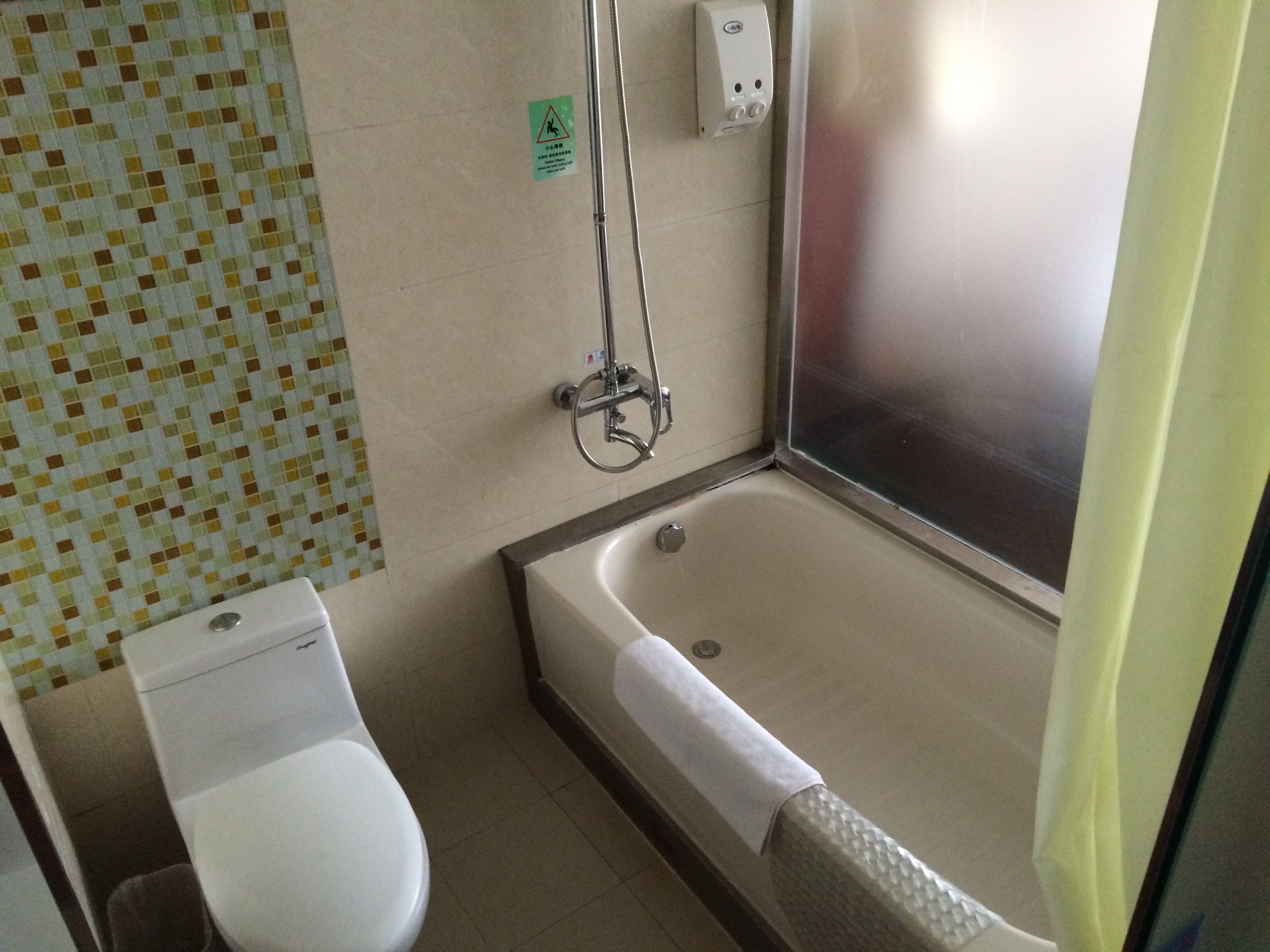 Out the sitting room window, I could see in the distance one of the many nuclear power plants.
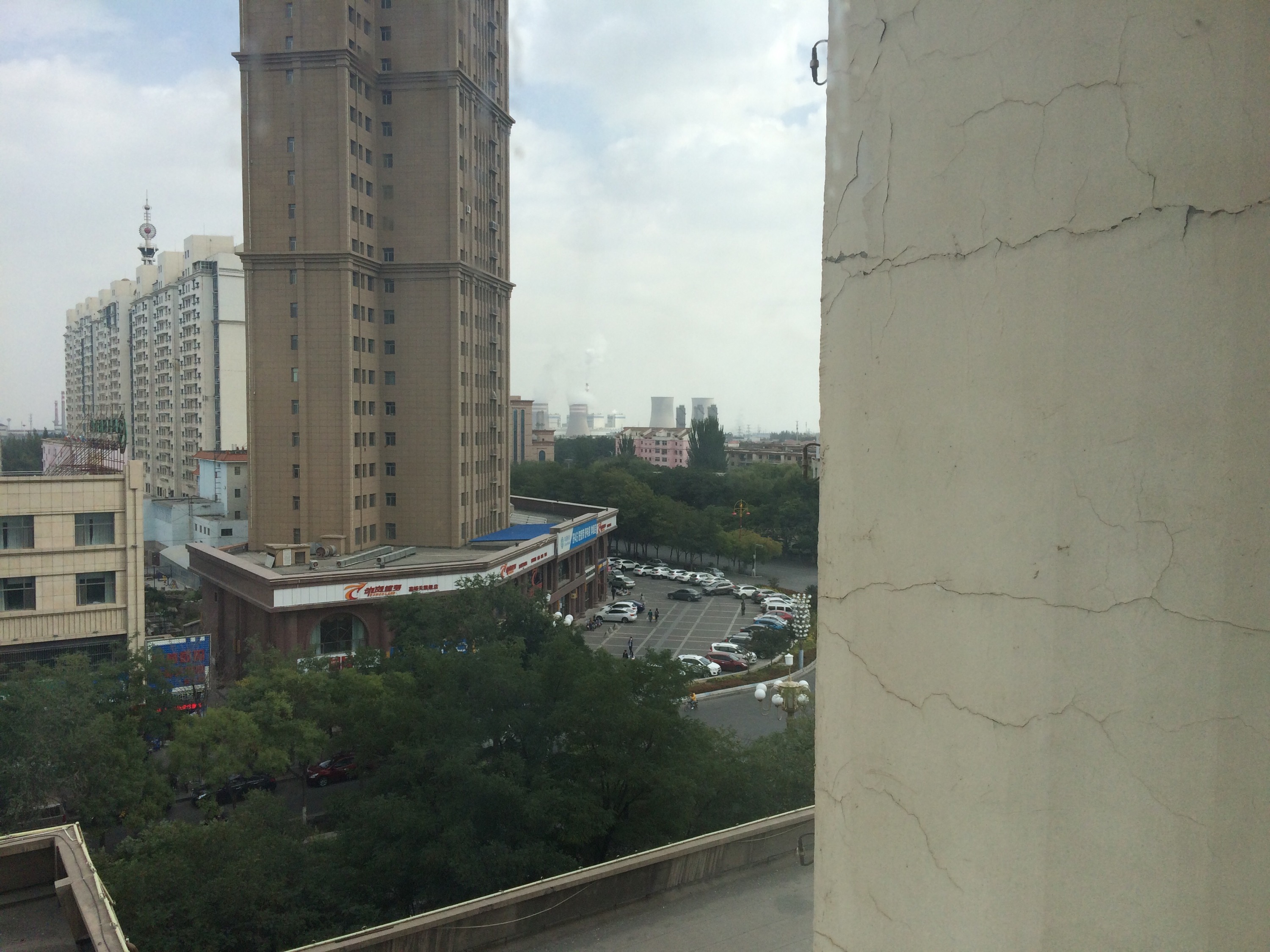
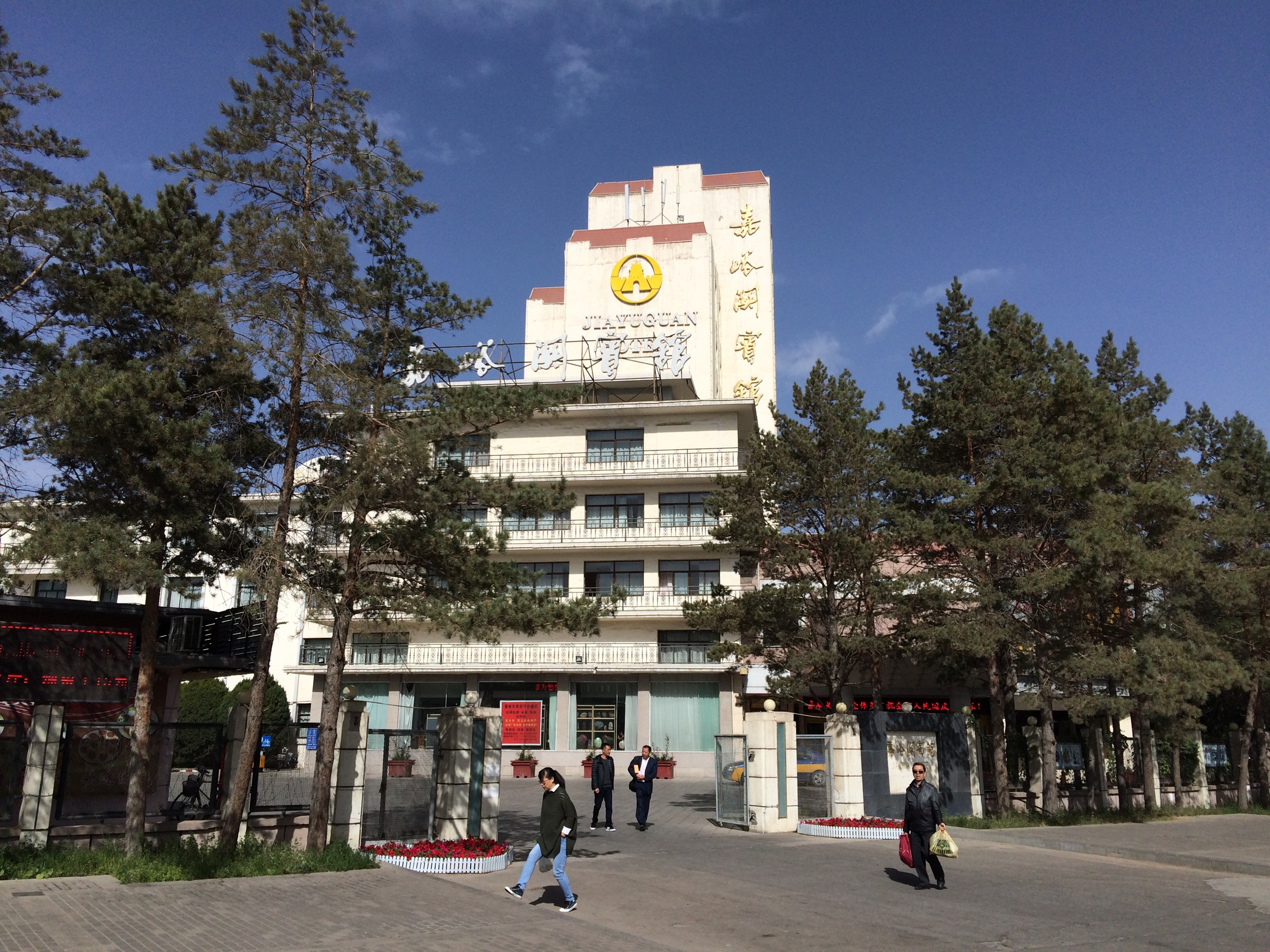 By all accounts, the Jiayuguan Hotel is the nicest hotel in town.
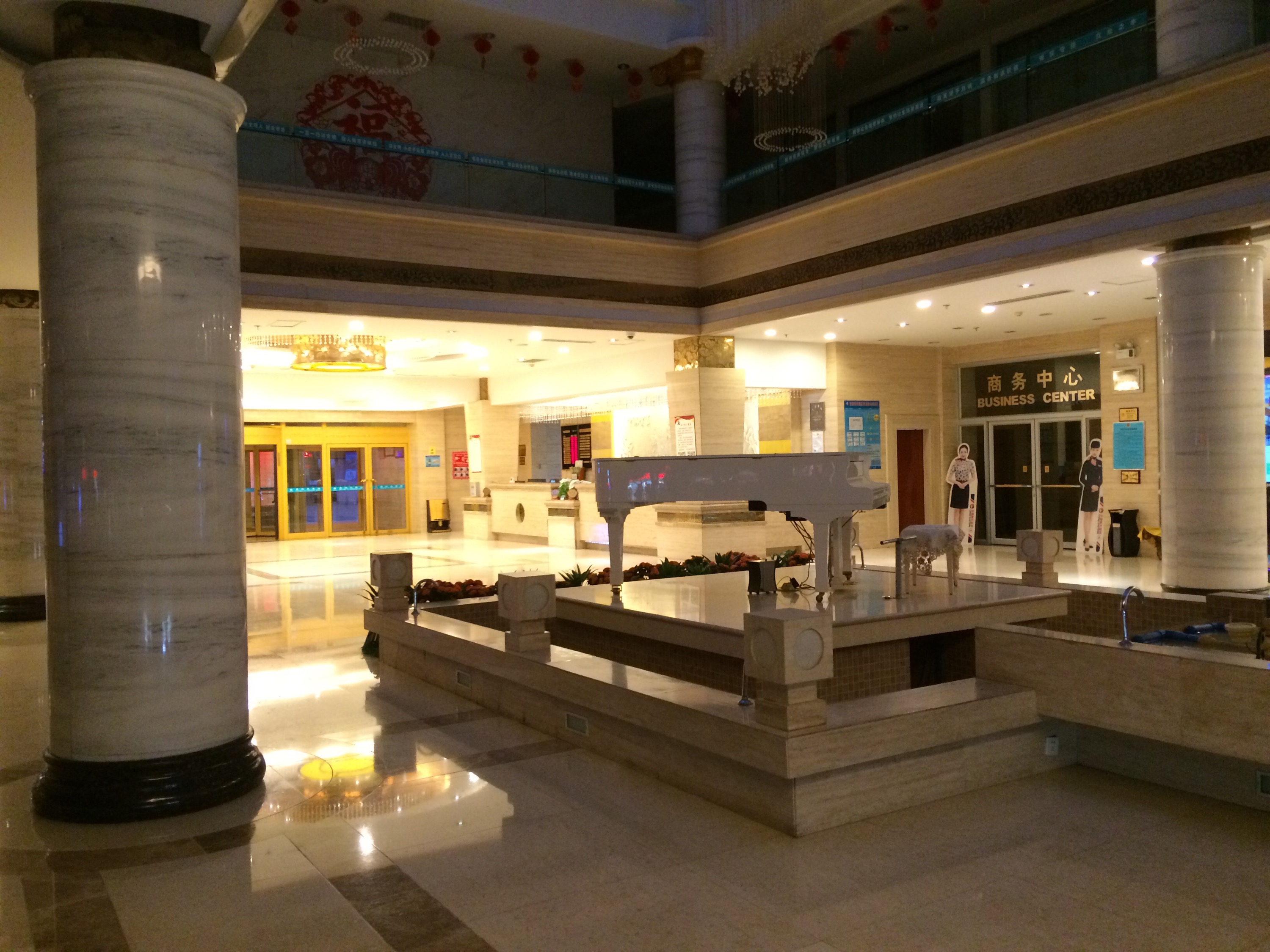 The elevators even had the same day-of-the-week floor mats that Debbie and I saw in the hotel in Datong!
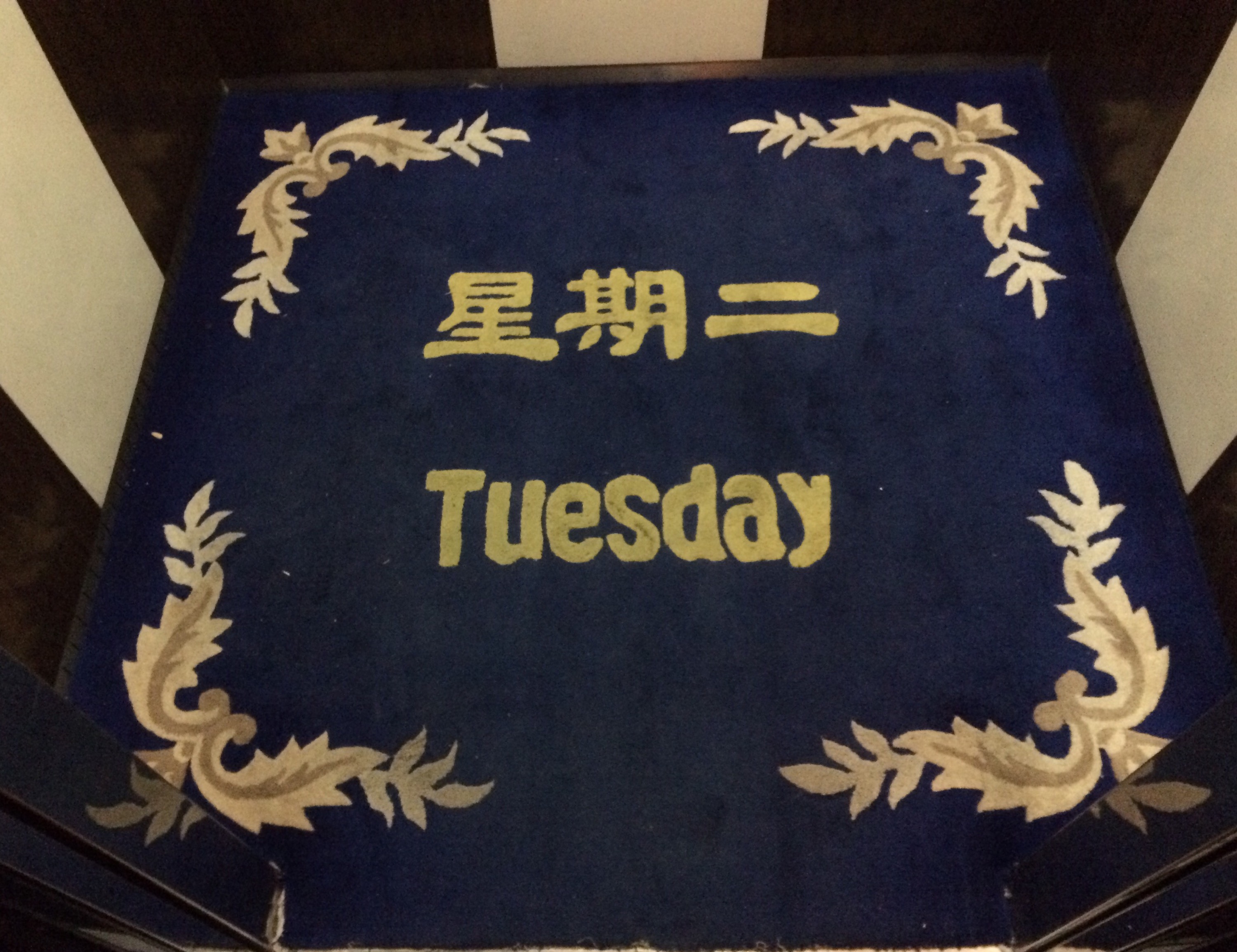 Apparently, it’s a thing.
I arrived at the Jiayuguan Hotel an hour before checkin, so I decided to have a drink at the bar and read my book in the lobby.
I wasn’t their usual clientele so, as has happened before, they had to crack open a new bottle just for the foreigner. (It was Johnny Walker Black.)
Some kids were running around, playing in the lobby. I got stared at a lot, per usual. Eventually, one girl came over and said, “Hello!” Her (Western) name was Katie. She was seven and her friend was eight. We started talking, a mix of my rudimentary Mandarin and their elementary school English. They kept running away and then running back to ask my name, again. Ask my age, again. Tell me their names, again. Tell me their ages, again. I asked them why they were at the hotel and it turns out that there was a wedding reception in the mezzanine above and all the kids were bored.
Apparently, some of the adults were bored, too. One by one, each of the girls’ dads came down, then another friend of there, then an older man (who may have been a grandfather or something.) We all started talking. The younger men asked me about Obama and Hillary. I got to use tons of vocabulary I had just learned like “vote” and “Republican” and “Democrat.” (This was interrupted by a lot of “This is your school bag” pointing to my backpack and more “What is your name?” It was also interrupted by the older man offering me cigarettes and coffee.)
After, like, the fifth time the girls had asked me how old I was, I told them my birthday was next week. Their fathers’ encouraged them to sing “Happy Birthday” to me, which was very sweet.
Eventually, the older man declared, “drink-uh!” This is usually where my introversion kicks in, but in the spirit of making new mistakes, I went along with it. All the men led me upstairs to the mezzanine, where the wedding reception was clearly winding down.
Then it got awkward.
I held back as the older man approached another older man (the bride’s father, perhaps?) sitting at a table. There was lots of gesturing toward me and then the seated older man got up and shooed me and the older man away!
I did not come to Jiayuguan to crash a Chinese wedding, so I was ready to get the hell out of there, but the older man insisted “drink-uh, drink-uh” and led me to another table were I was offered a shot of biajiu. I drank it and thanked them all profusely. The bride’s father came to shoo us off again and I thanked the older man, the children’s father, the children and scurried off to the reception desk to check in to my room.
(The next day, I ran into the older man on the street near the hotel. He wanted to have a drink, but I lied and said I had to work. We shook hands and that was that.)
 In the middle of the traffic circles in Jiayuguan are the oddest statues. This is the one in front of the Jiayuguan Hotel.
 I saw these transmission towers going up and over the mountains just like the Great Wall does.
I was struck by how much construction was going on, out in the middle of a sparsely-populated province. I saw tunnels being bored through mountains and perilously tall highway pylons stretching out to seemingly nowhere.
 I saw a freshly-built gas station ready to open with a woman pushing a handcart of vegetables in front of it. I saw janky, Mad Max-looking vehicles struggling to keep up with car carrier trailers delivering new cars to distant cities.
It’s like half of the country is living in some bright, utopian dream of tomorrow and half the country is living in some post-apocalyptic dystopian nightmare.
Maybe this is what the Great Depression felt like. The story of great civic works projects intertwined with the story of humans just trying to survive.
Or maybe this is just life itself. Growing and dying, all at the same time.
 I found the geology of Qinghai intriguing. Parts of it reminded me of parts of California, other parts reminded me of the Rocky Mountains, and still others reminded me of the (frankly, insane) geology of Wyoming and Yellowstone Park.
Coming back from Qinghai Lake, we were running low on gas. And by “gas” I mean actual gas, because the driver’s car ran on natural gas. Or so I thought.
At the start of our journey in Xining, we had filled up his car at a natural gas pumping station. When I asked about it, my driver told me that most of the business vehicles in Xining run on natural gas.
Out in the middle of nowhere, we got off the highway and pulled behind a long line of cars at the filling station. I mean really long. 1970s Carter-era oil embargo long. There were two pumps and I clocked the speed of fill-ups at about five minutes per car. We were going to be here forever.
My driver parked the car and got out to smoke & chat with the other drivers. We were still in the middle of nowhere, so I didn’t have an internet connection, so I just tried to rest my eyes. Every five minutes, my driver would pull the car up another car length.
We did this for about half an hour.
I heard raised voices. My driver was arguing with someone but I couldn’t tell who. Abruptly, he got into the car and we sped off. I tried to suss out what was wrong but all I picked up something about 压力 (yālì) which means “pressure” or “stress.” Was he stressed out? Did he have an argument?
We pulled into another filling station, but this one was for gasoline, not natural gas. We pulled in the wrong direction. There was arguing. We pulled around the other way and got stuck behind a long line of cars. (Even longer since the pumps alternated between filling cars and filling walkup customer’s gas canisters.) Finally — about an hour after we had pulled off the highway — we had a full tank and got back on the road.
I had some questions for my driver.
“Your car can use natural gas or gasoline?” “Yes.”
“The first place had low gas pressure?” “Yes.”
“So it was taking too long for each car to fill up?” “Yes.”
“So you decided to get gasoline instead?” “Yes.”
Mystery solved.
 Tibetan culture dominated the southern rim of Qinghai Lake. Shrines and prayer flags dotted the landscape.
 This was the only herder I saw that was not on foot or motorcycle.
 Every kilometer or so were Tibetans luring passersby to take photographs in the rapeseed fields, bright yellow against the blue of the lake.
 It made me quite sad, seeing this indigenous culture trying to eek out an existence by whoring out their native land’s natural beauty to mostly Chinese (and some Japanese) tourists. I was sharply reminded of the commodification of Native American culture as you drive through the Southwest.
I’ve had my share of harrowing driving experiences. Driving down the coast of Oregon at night in a rainstorm. Driving left-handed stick shift on the “wrong” side of the road in England. Driving up and down Cape Cod in a Nor’easter.
But I was always in control. I was by myself. I was the one driving.
After Bird Island, my driver started yawning and dabbing his eyes every thirty seconds. Now, the Chinese think of the rules of the road as mere suggestions. Attention is rewarded when driving in China. Inattention is…foolhardy.
I wasn’t in control. I was with him. He was the one driving.
I was going to die.
Every time he’d yawn and drift into traffic or attempt to pass a slower car despite oncoming traffic, I thought to myself, “Well, ‘died in a car crash in China’s remote Qinghai province’ isn’t the worst obituary I could come up with.”
I like to think that my loved ones would be able to say that David died doing what he loved: watching politely while he judged a stranger for doing their job badly.
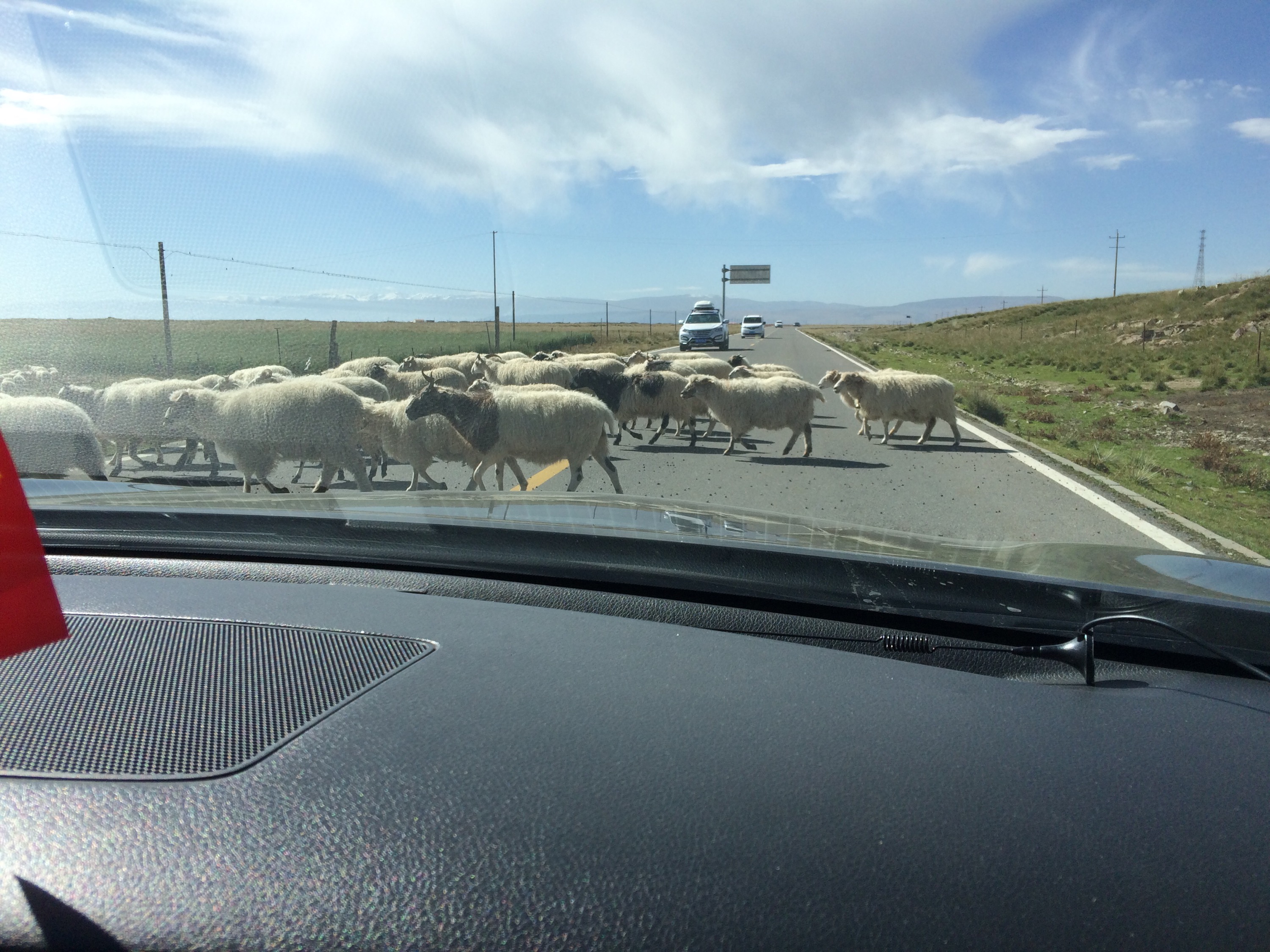 The short road back from Bird Island to the main highway was surprisingly slow. Locals — some on foot, some on motorcycle — had no qualms about blocking traffic.
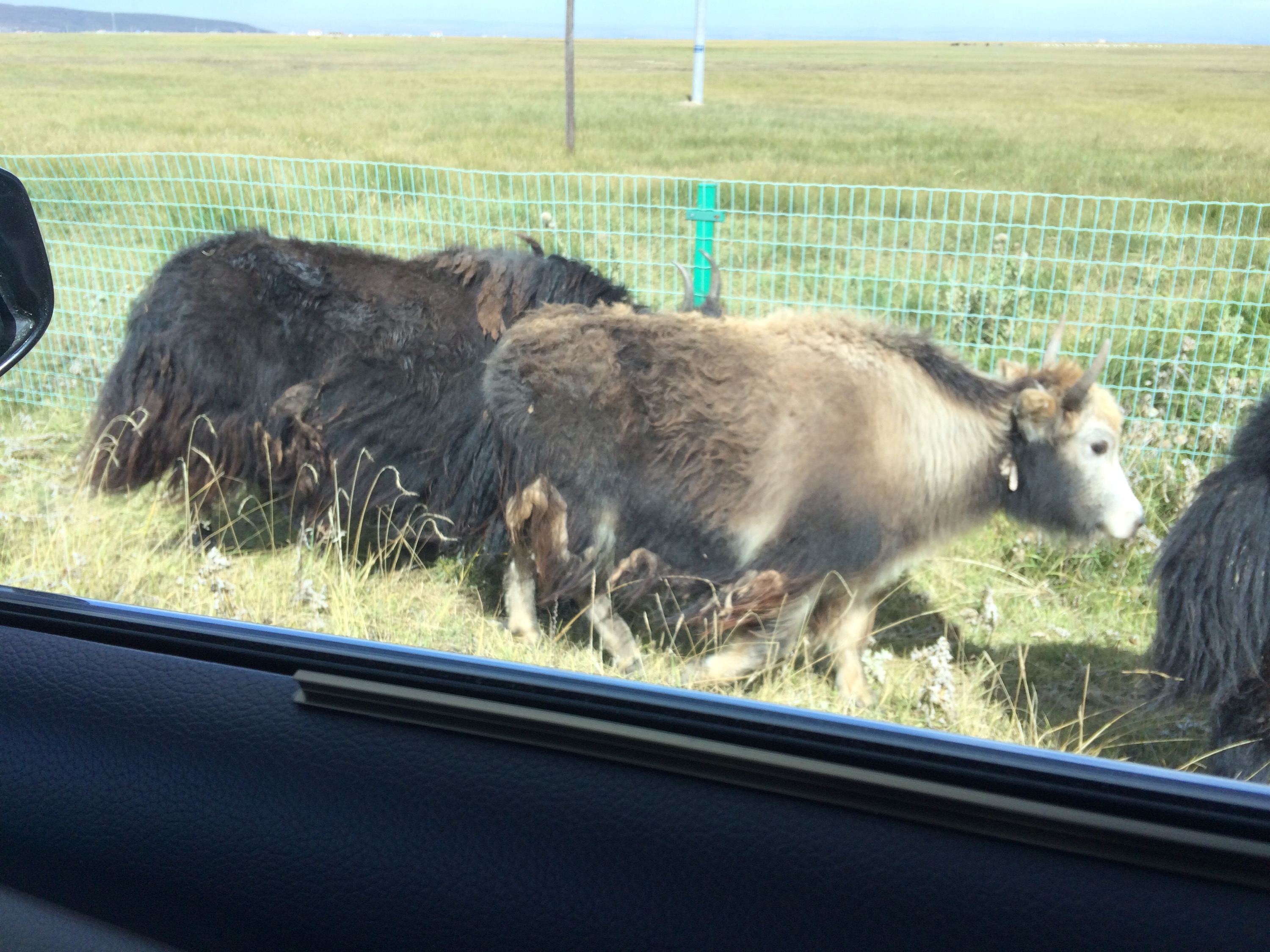
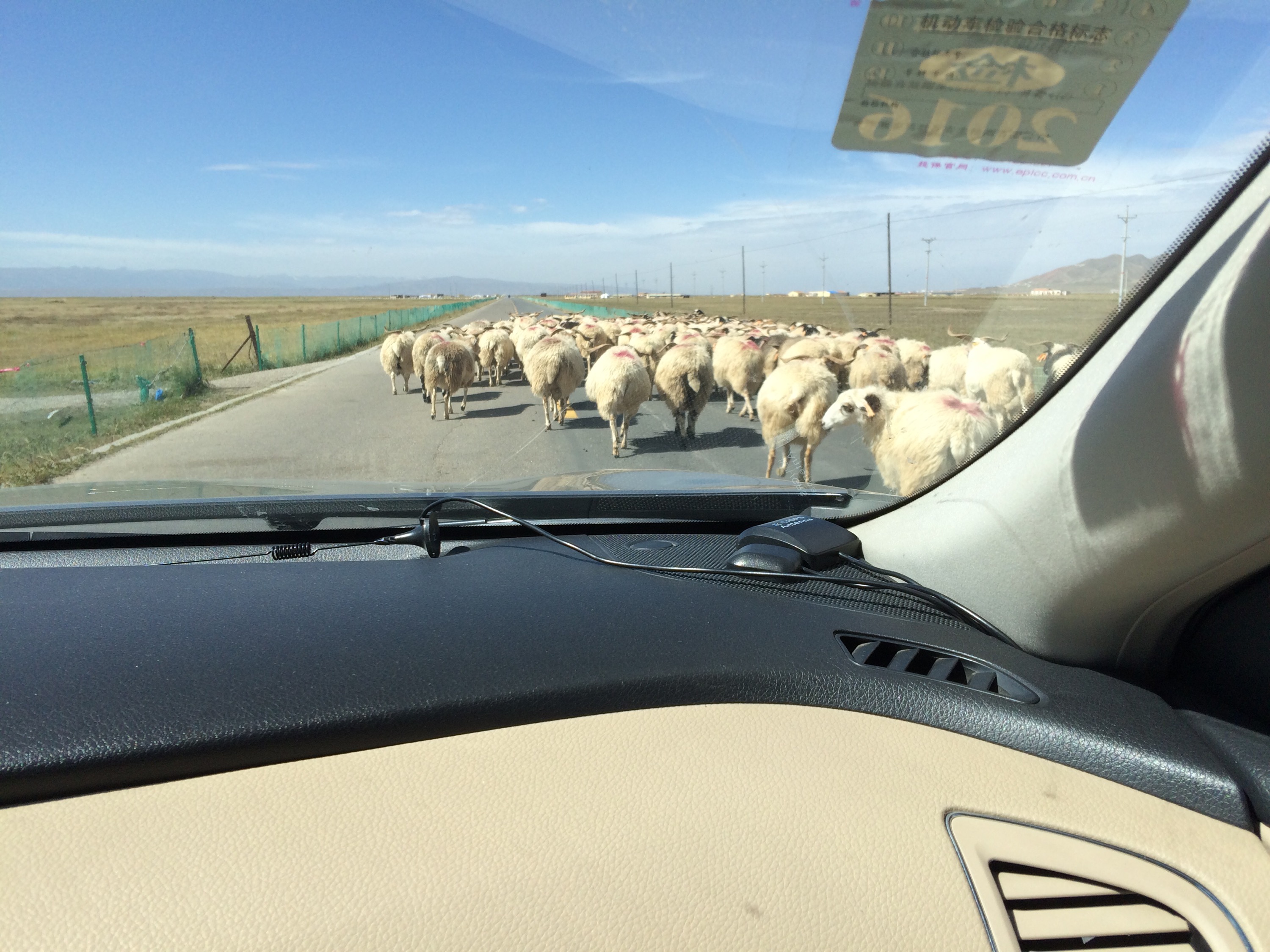 In Mandarin, I quipped to my driver, “They call it Bird Island but they really ought to call it Cow and Sheep and Horse Island.” He laughed generously.
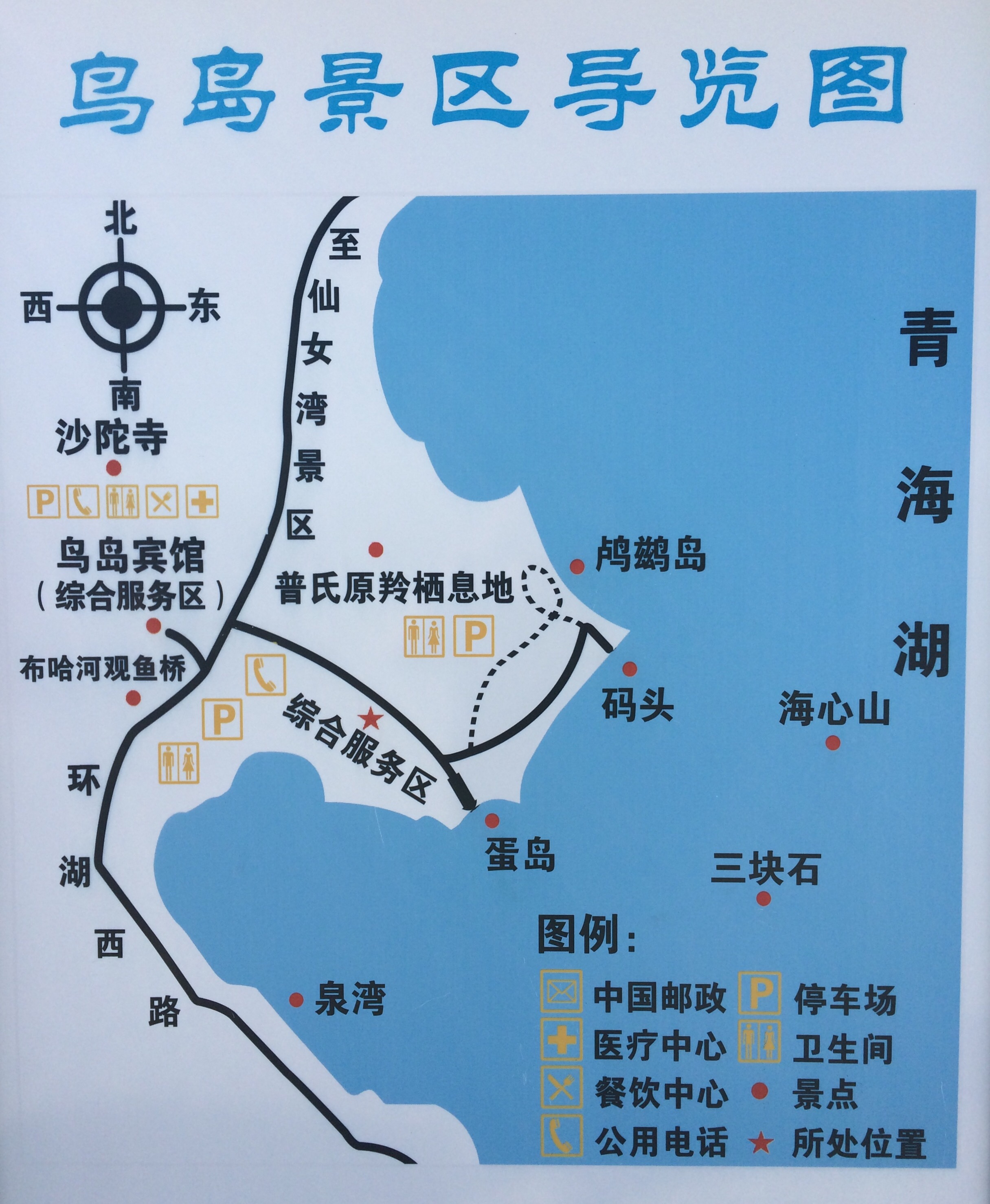 One of the major tourist spots in Qinghai is 鸟岛 (Niǎo dǎo meaning “Bird Island.”) In fact, the Hanzi character for “island” comes from the character for “bird” atop the character for “mountain.”
However — much like Monster Island — Bird Island is a misnomer.
Bird Island (not an island) comprises two, smaller islands called Egg Island (not an island) and Cormorant Island (also not an island.)
As this was the off season, the place was very quiet. Ominously so. On Egg Island, the Eggs Observation Exhibition looked abandoned and foreboding.
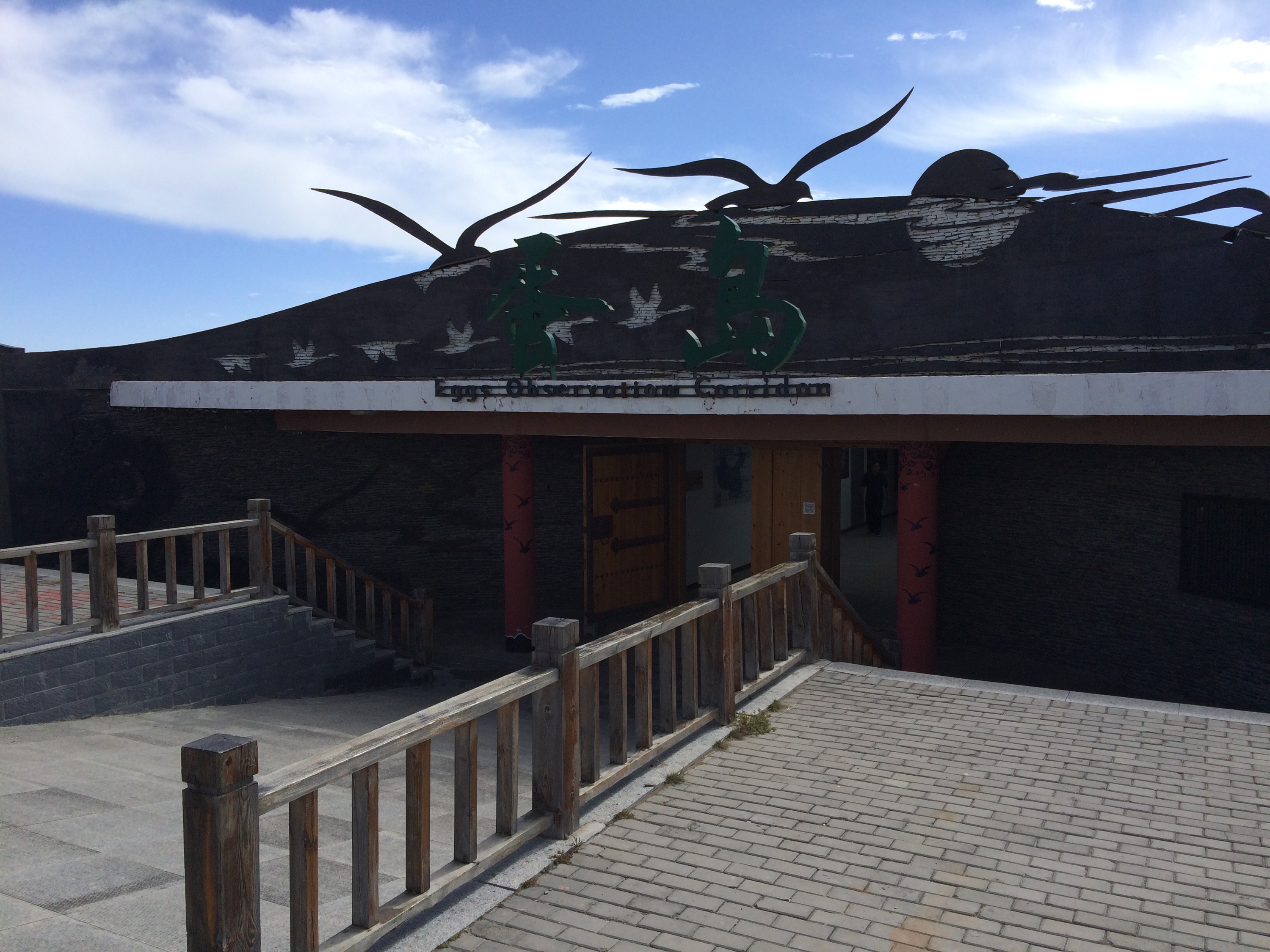 Inside, the whole thing had a 1950s/1960s U.S. National Park Service aesthetic.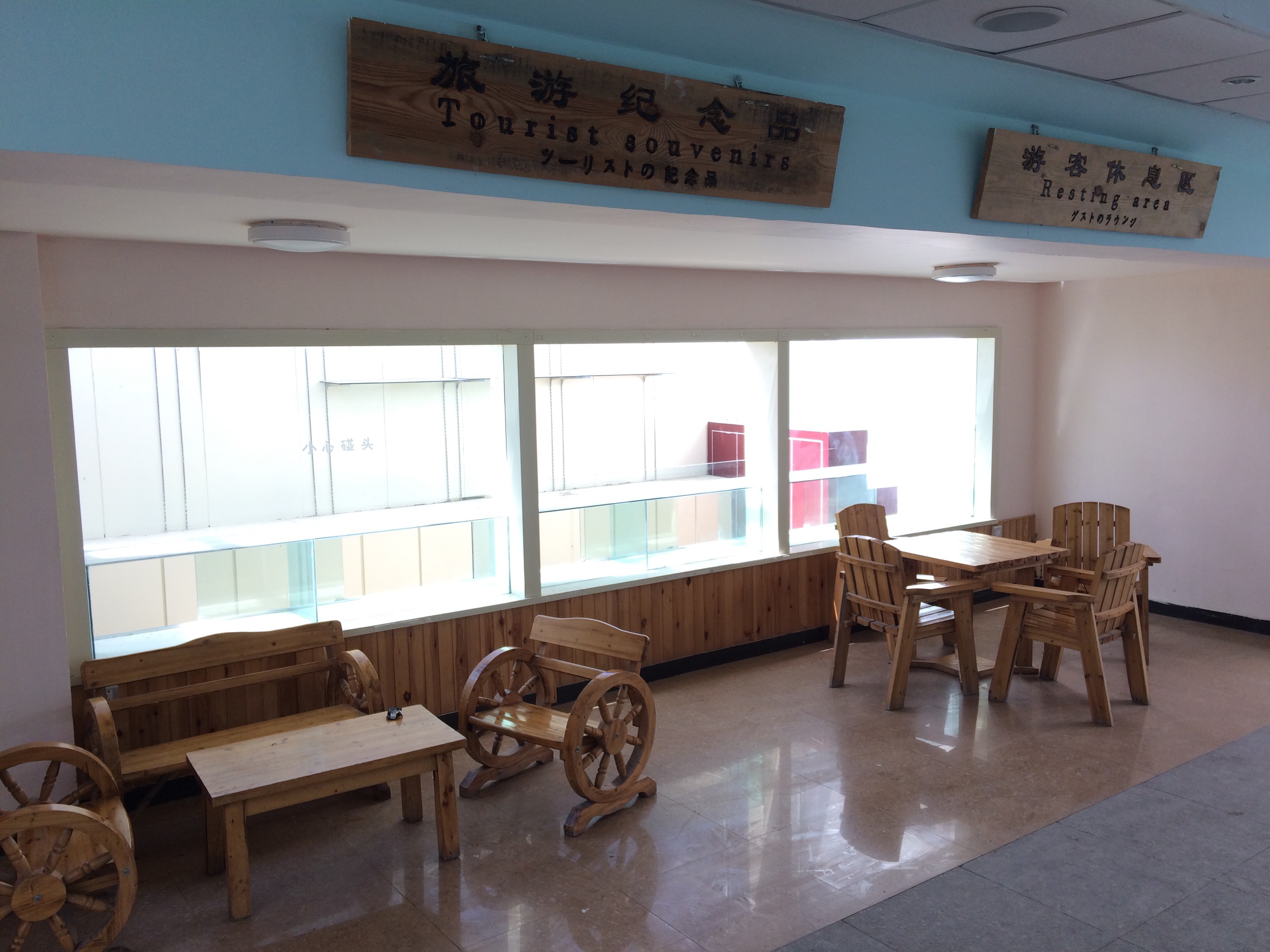
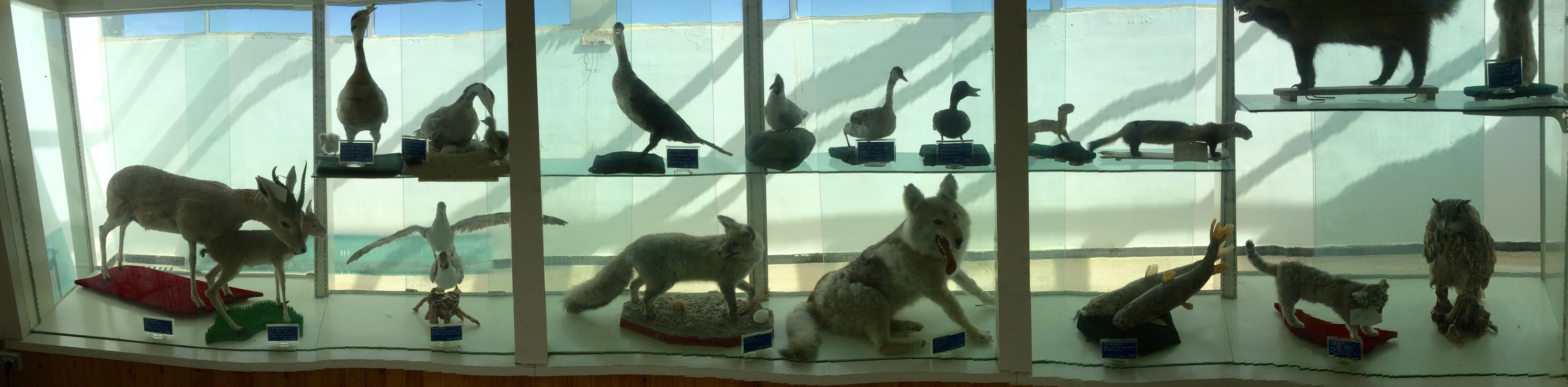
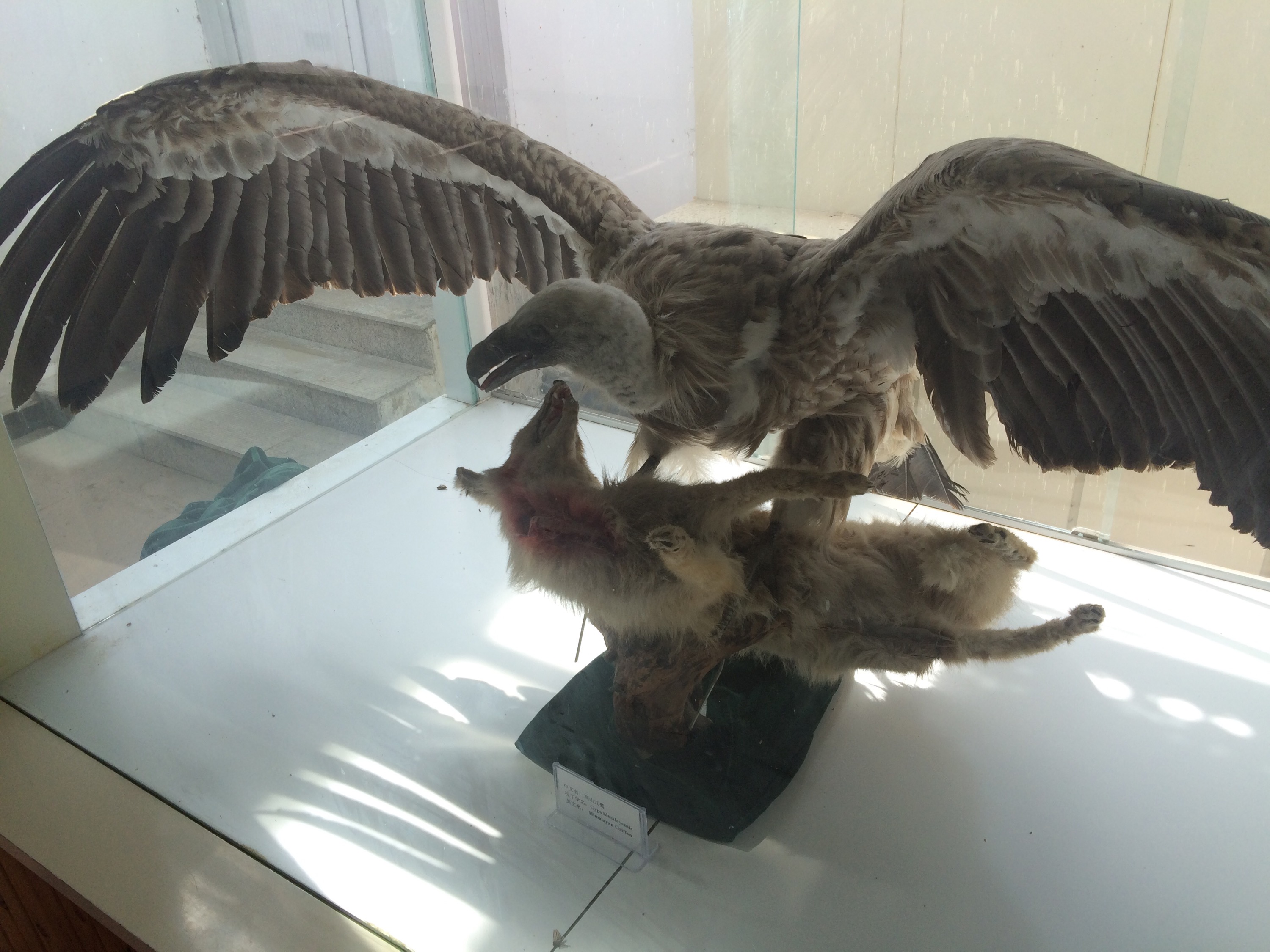
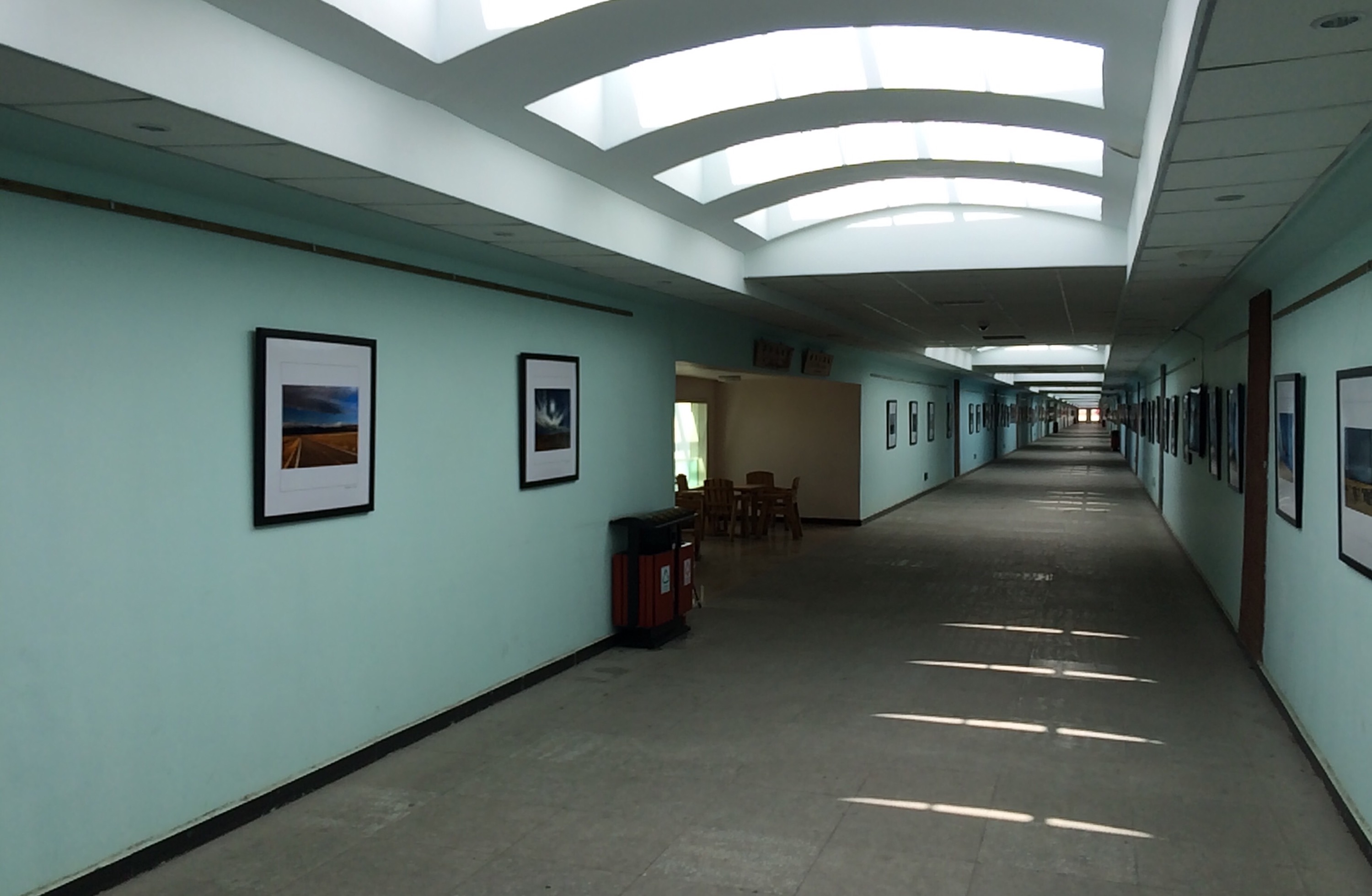 Finally, I came to the end of the corridor.
 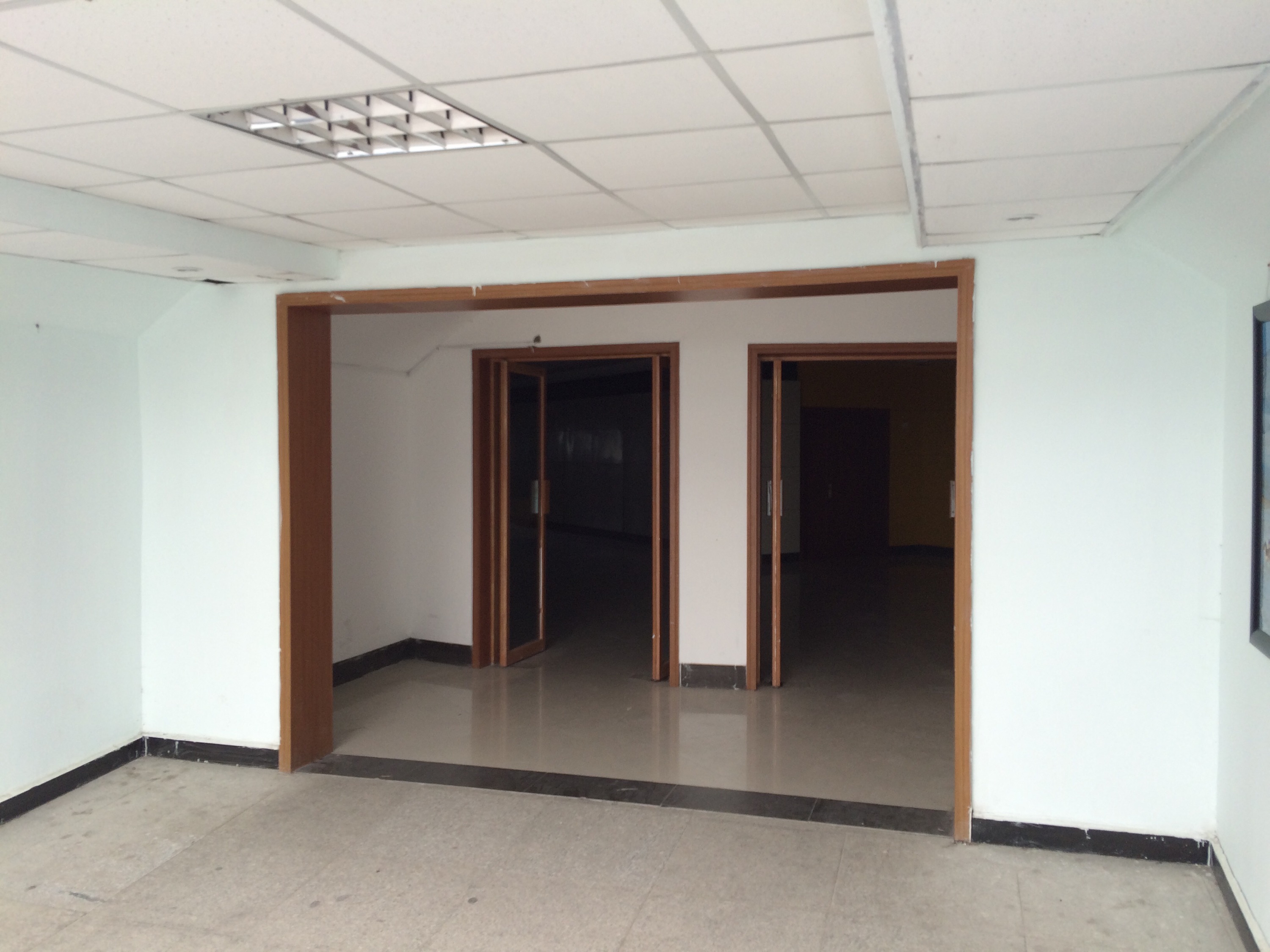 I crept inside, cautiously.
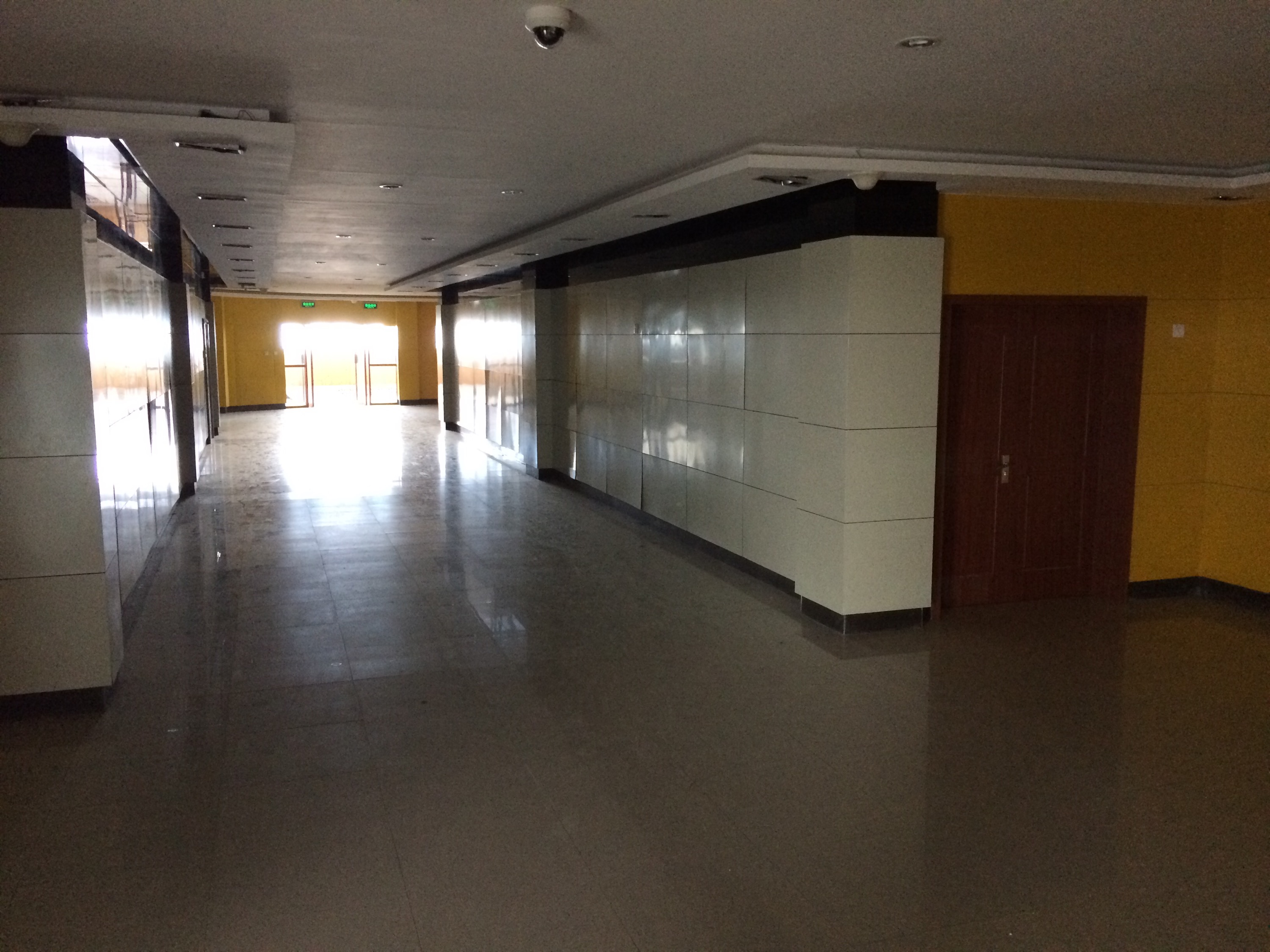 There was a curving hallway…
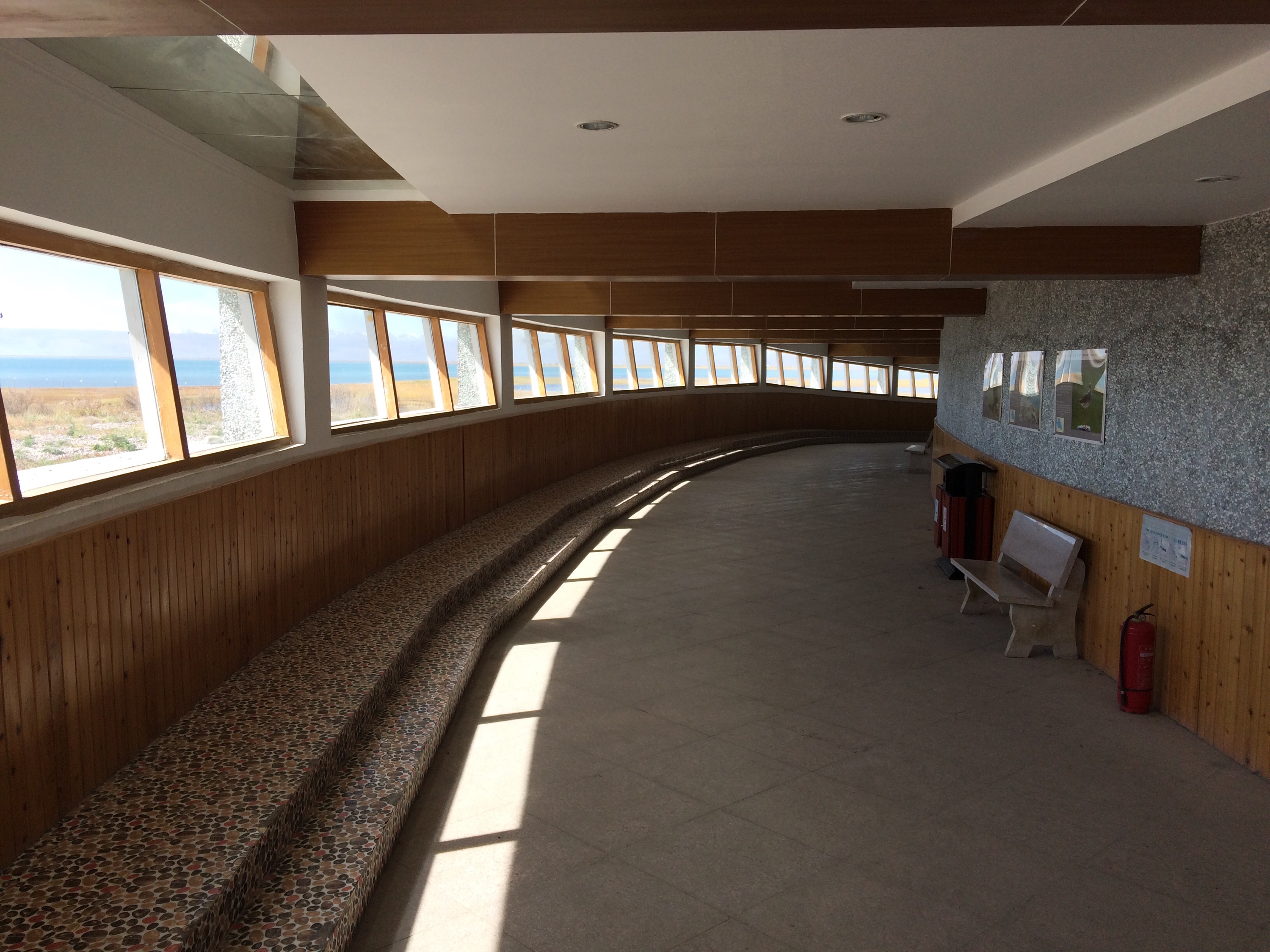 …offering a panoramic view of Egg Island.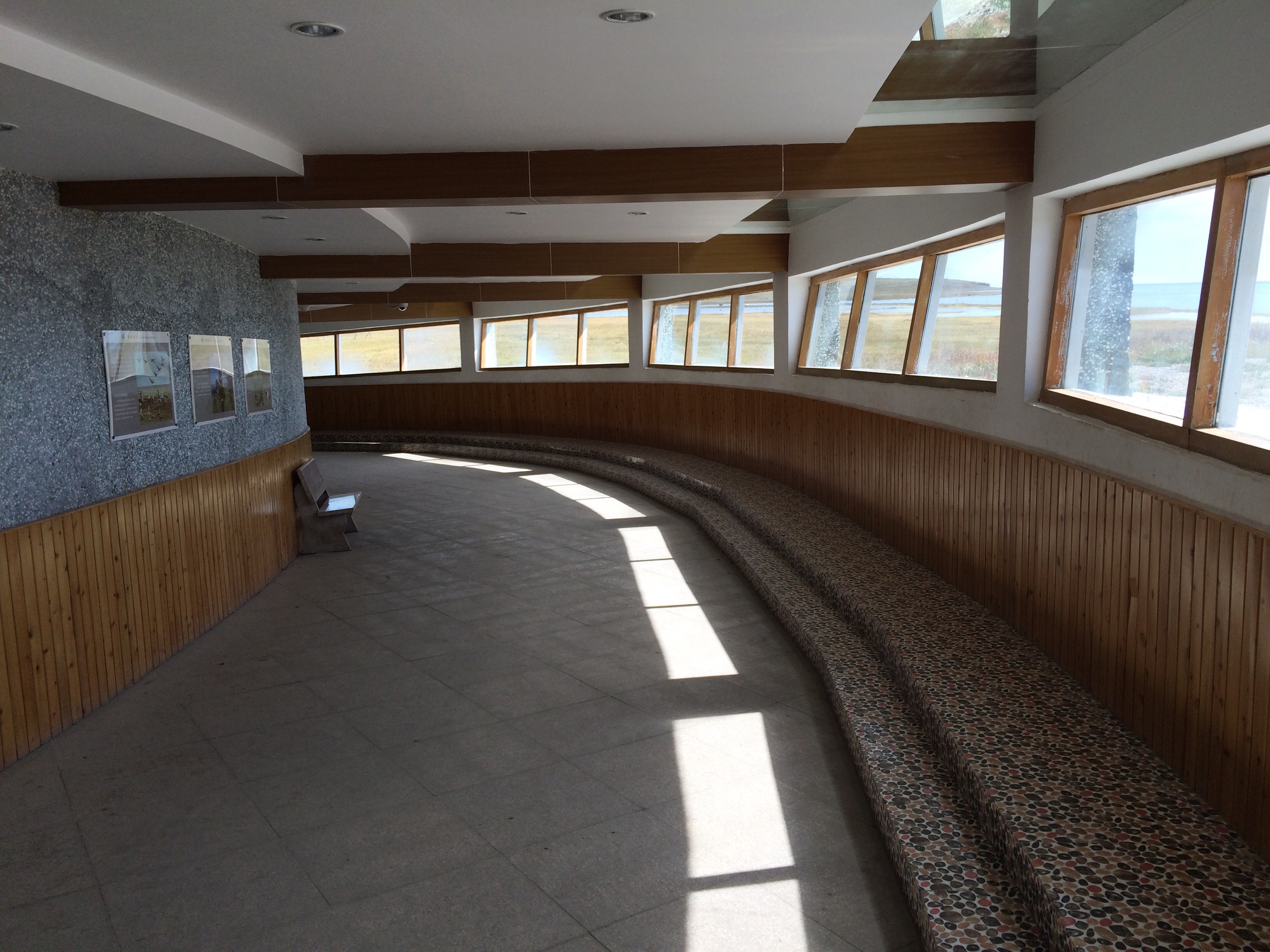
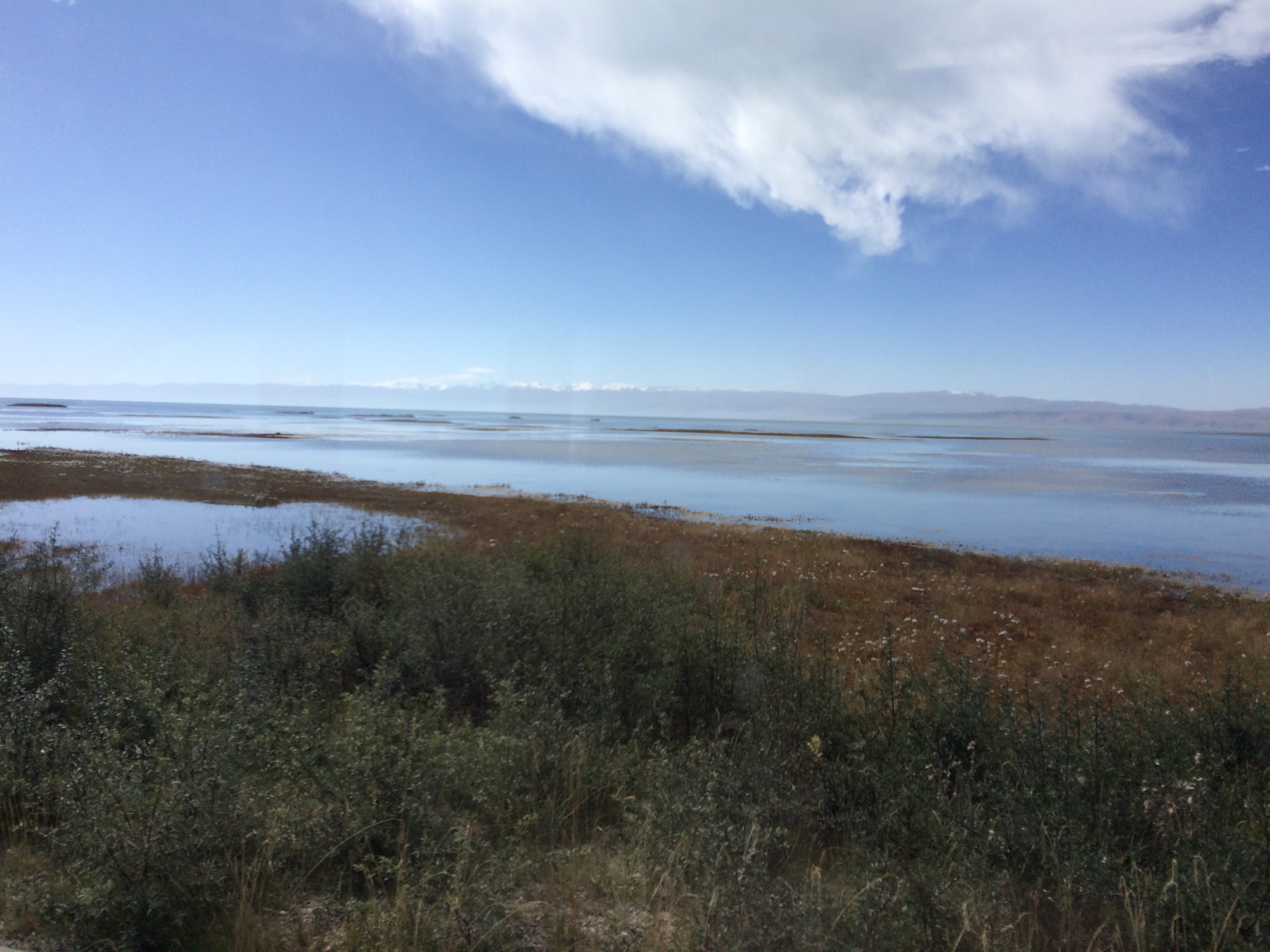
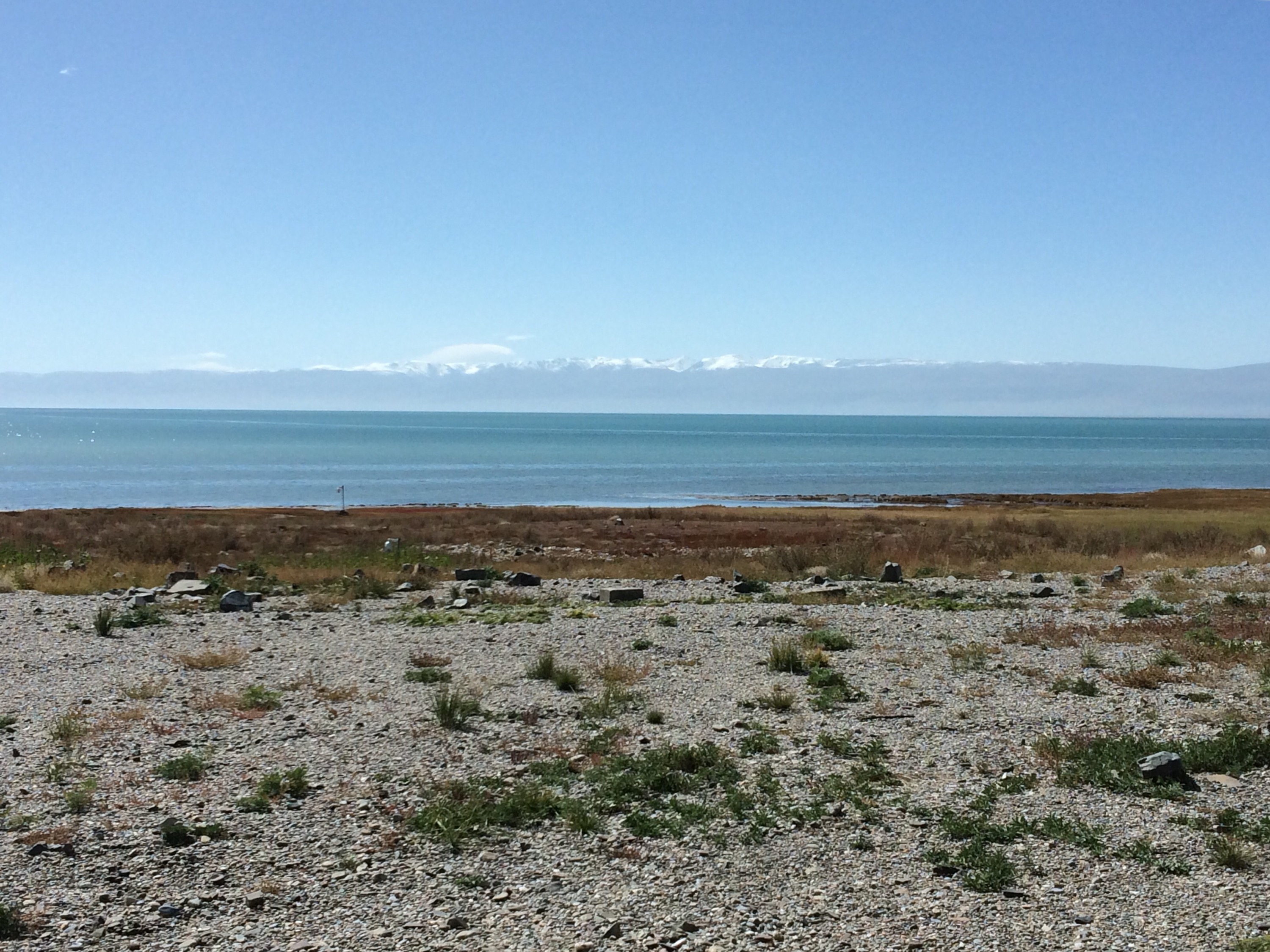 …and grassy fields leading to the lake on the other.
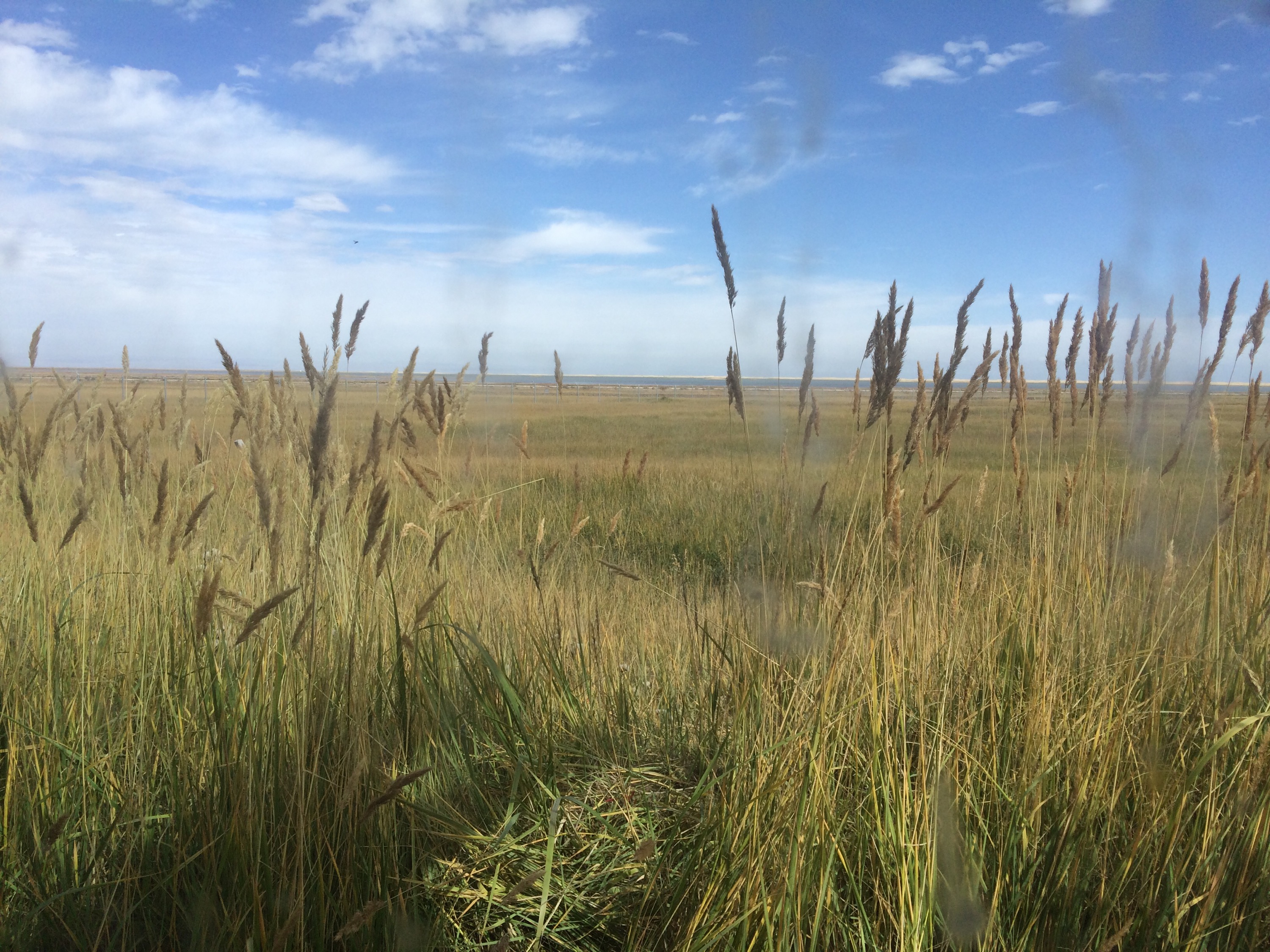 The place was serene.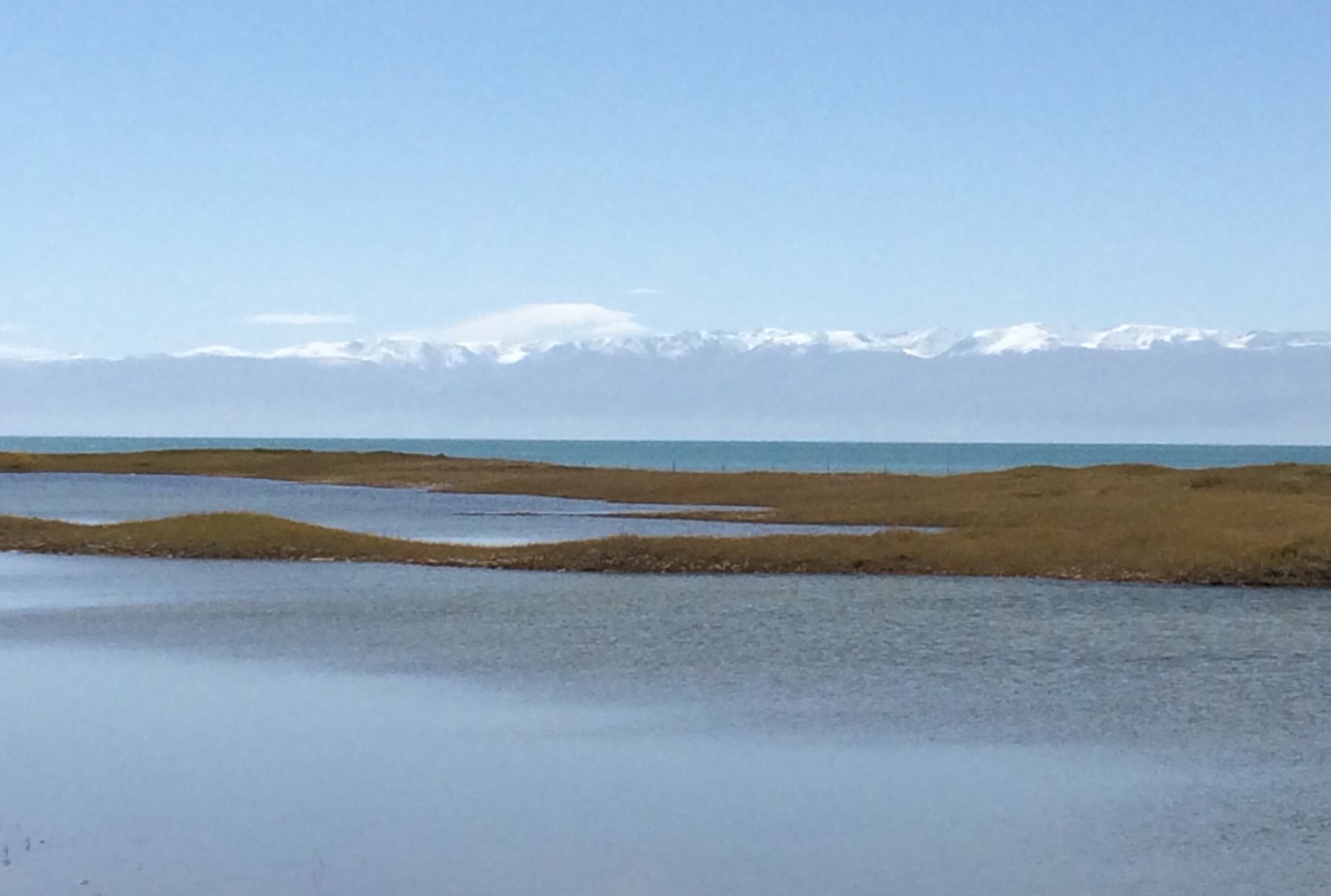
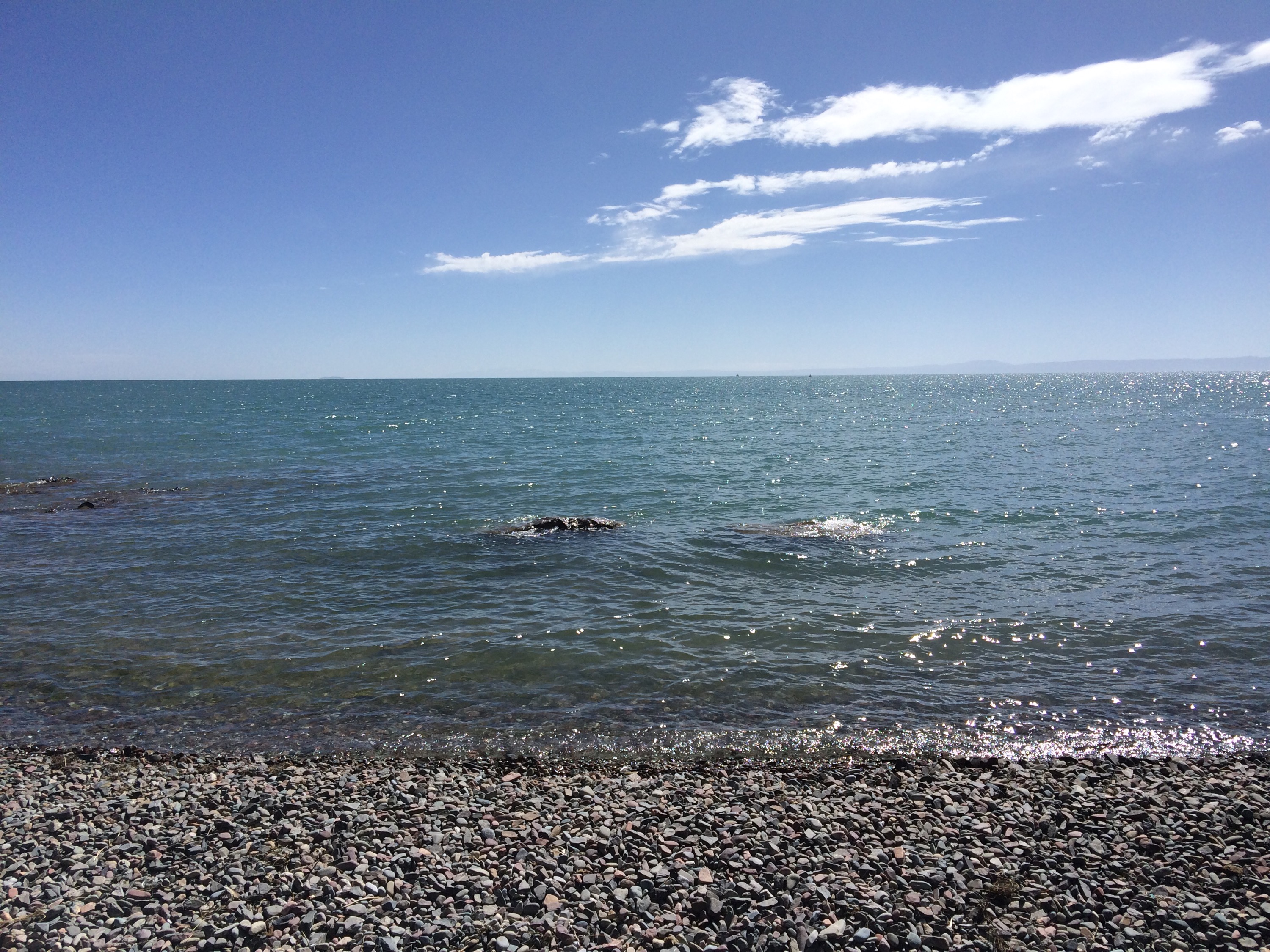
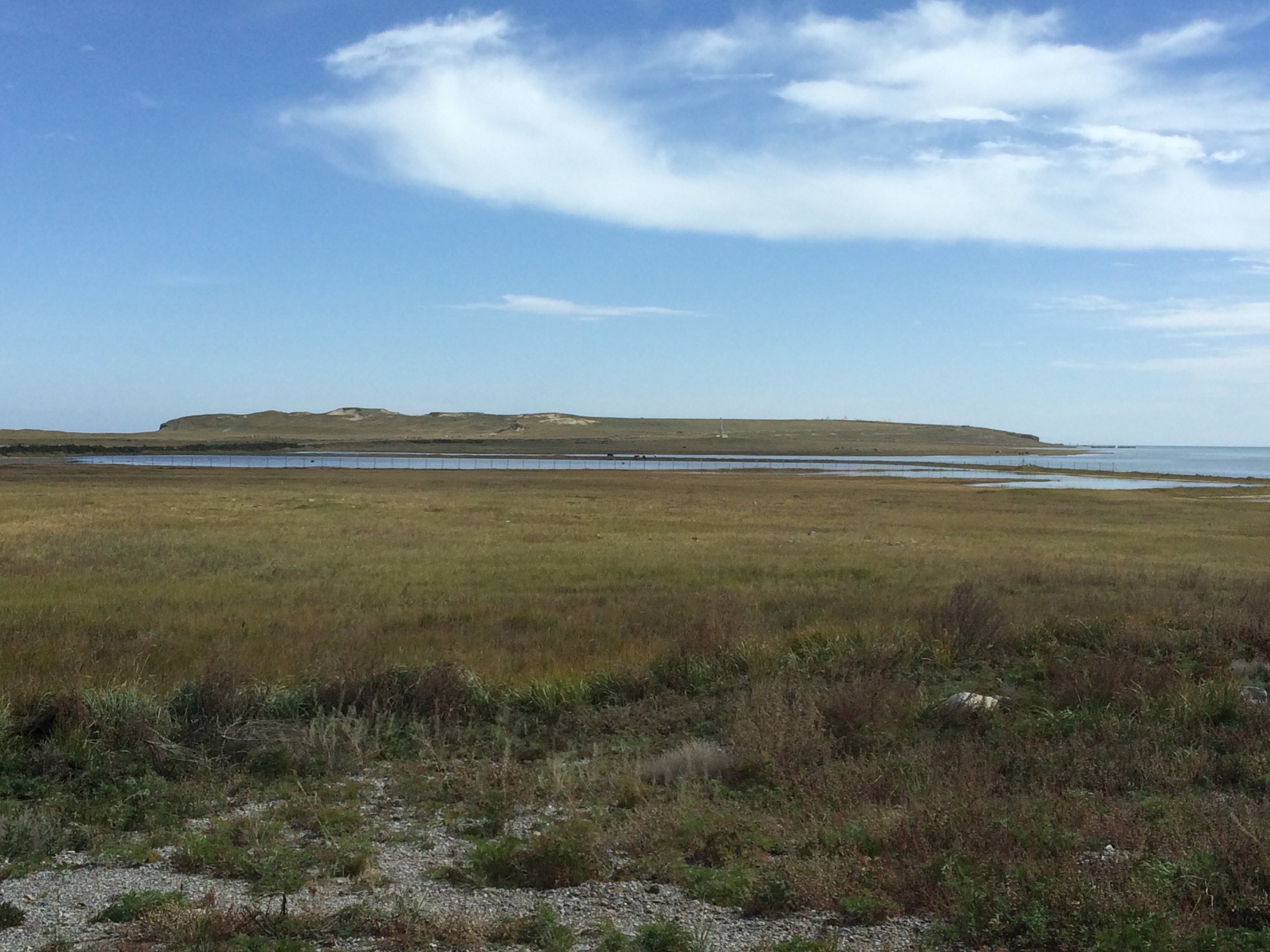

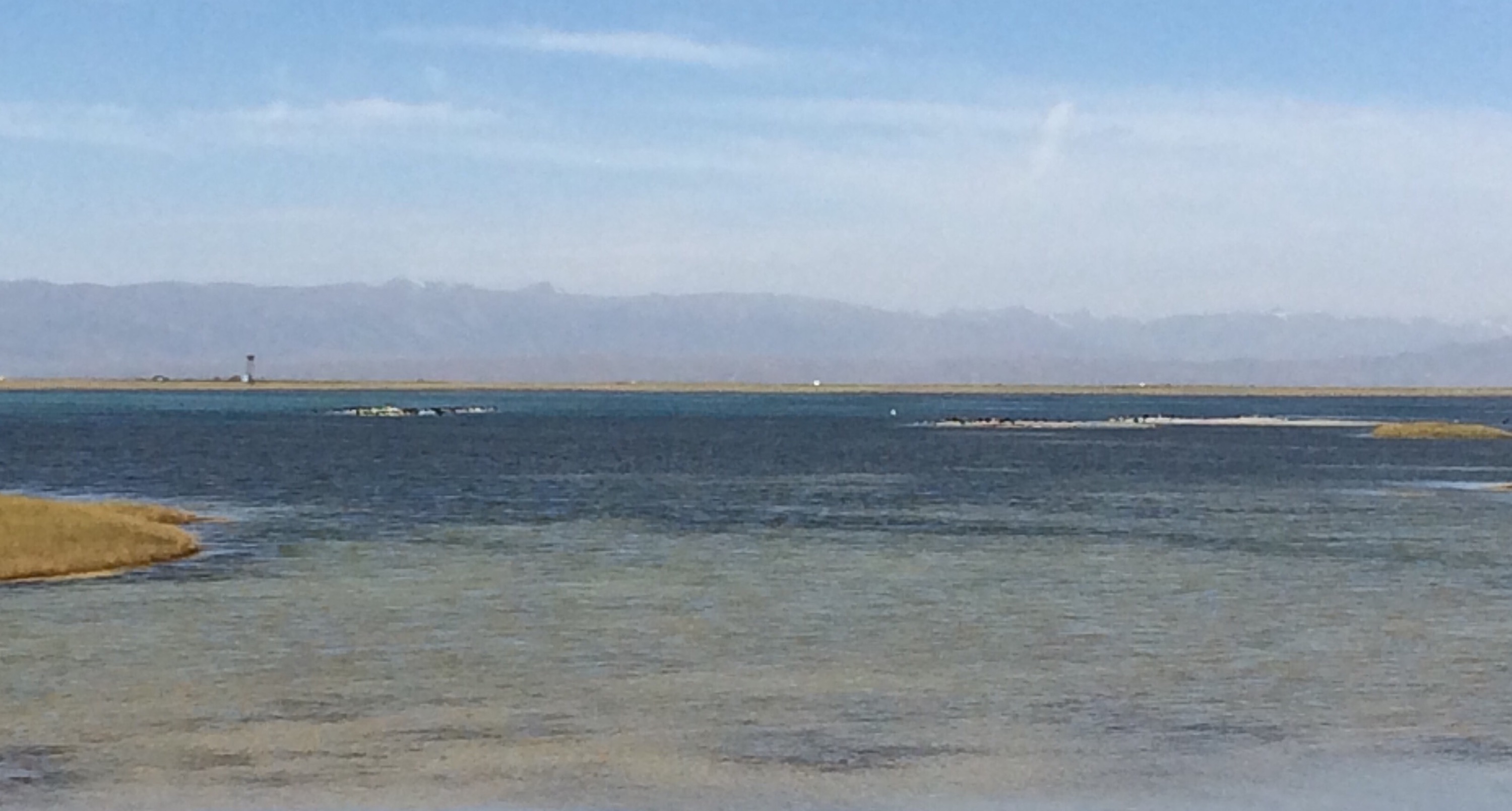 …and these sitting on a wire, presumably admiring the view.
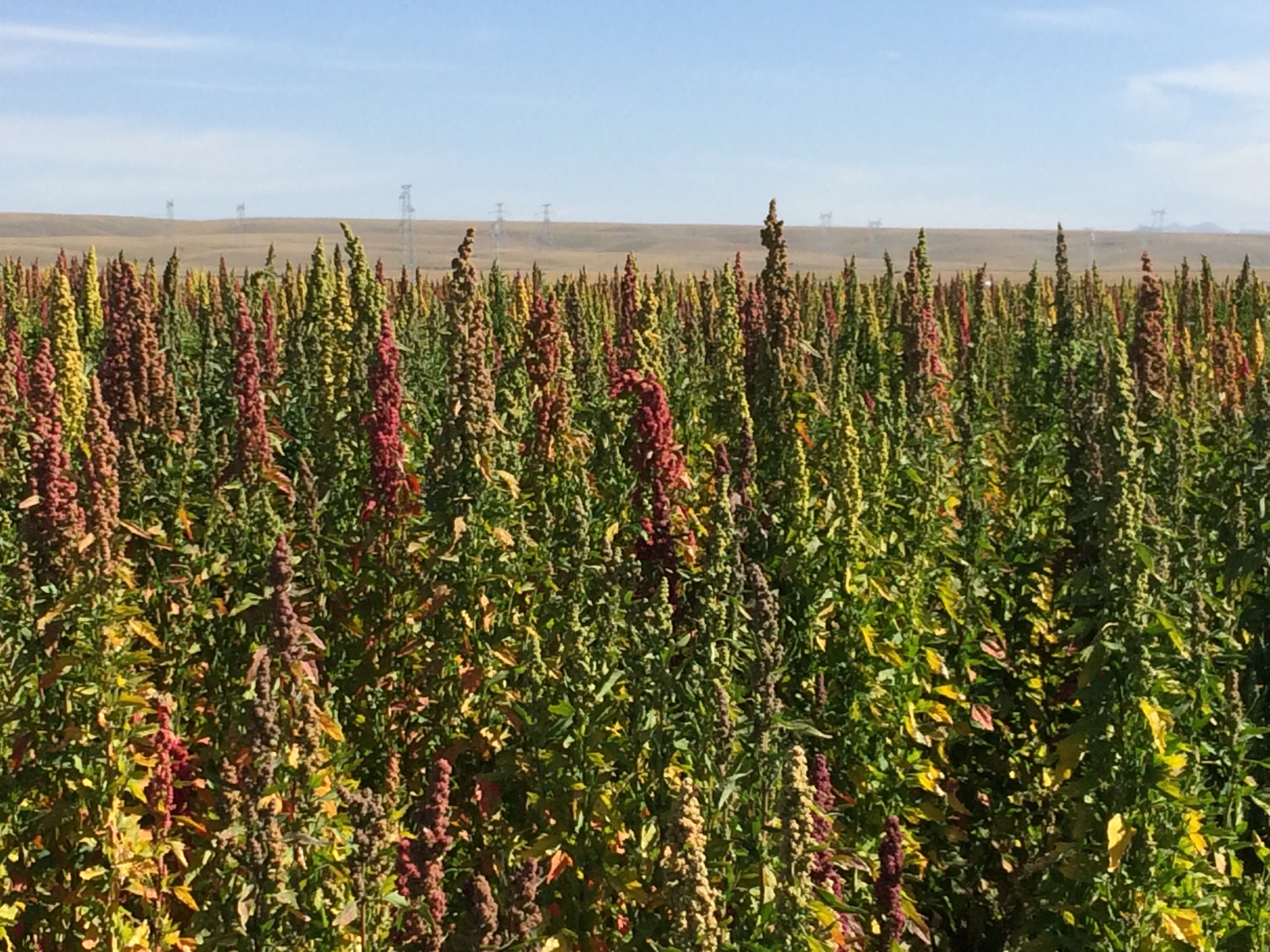
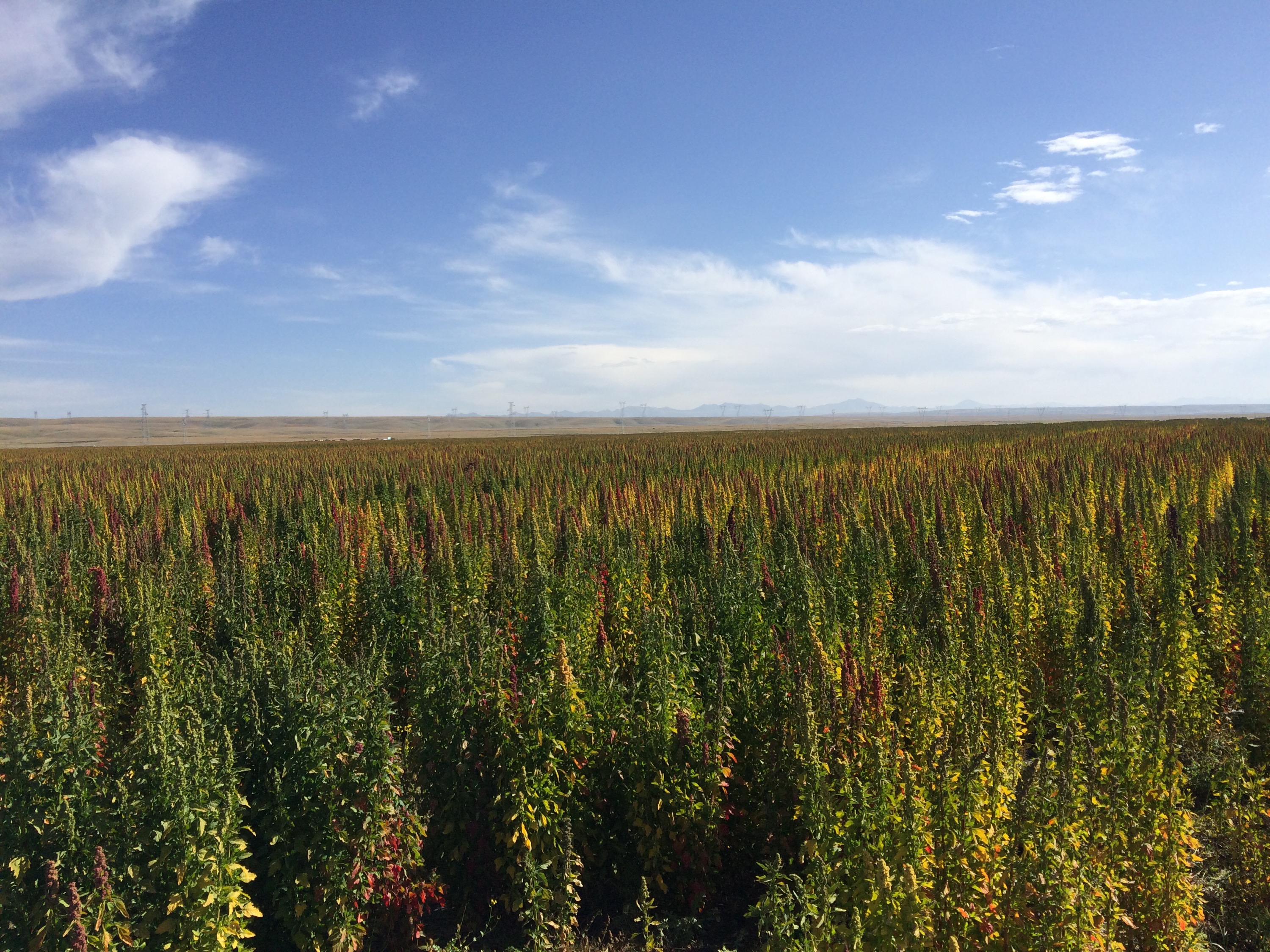 On the north rim of Qinghai Lake, I saw fields and fields of this red-yellow crop. Vaguely, in the distance, you can see the Qilian Mountains which divides Qinghai from Gansu Province.
My driver and I stopped to take a look. He couldn’t remember the name of the plant. (Later he would recall that it was 油菜 (yóucài meaning “rapeseed” but this seems unlikely.)
Although beautiful, it had a pungent odor which clung to our fingers so much that we had to roll down the car’s windows.